
The complete guide
A Practical Guide to Choosing White Cotton Fabric
Start with the project, not just the colour
Buying sewing fabric can feel simple until you start checking the details. A white cloth may look right in a picture, but your pattern also needs the right width, weight and structure. A little planning now can save you from running short or choosing a fabric that behaves differently from what you expected.
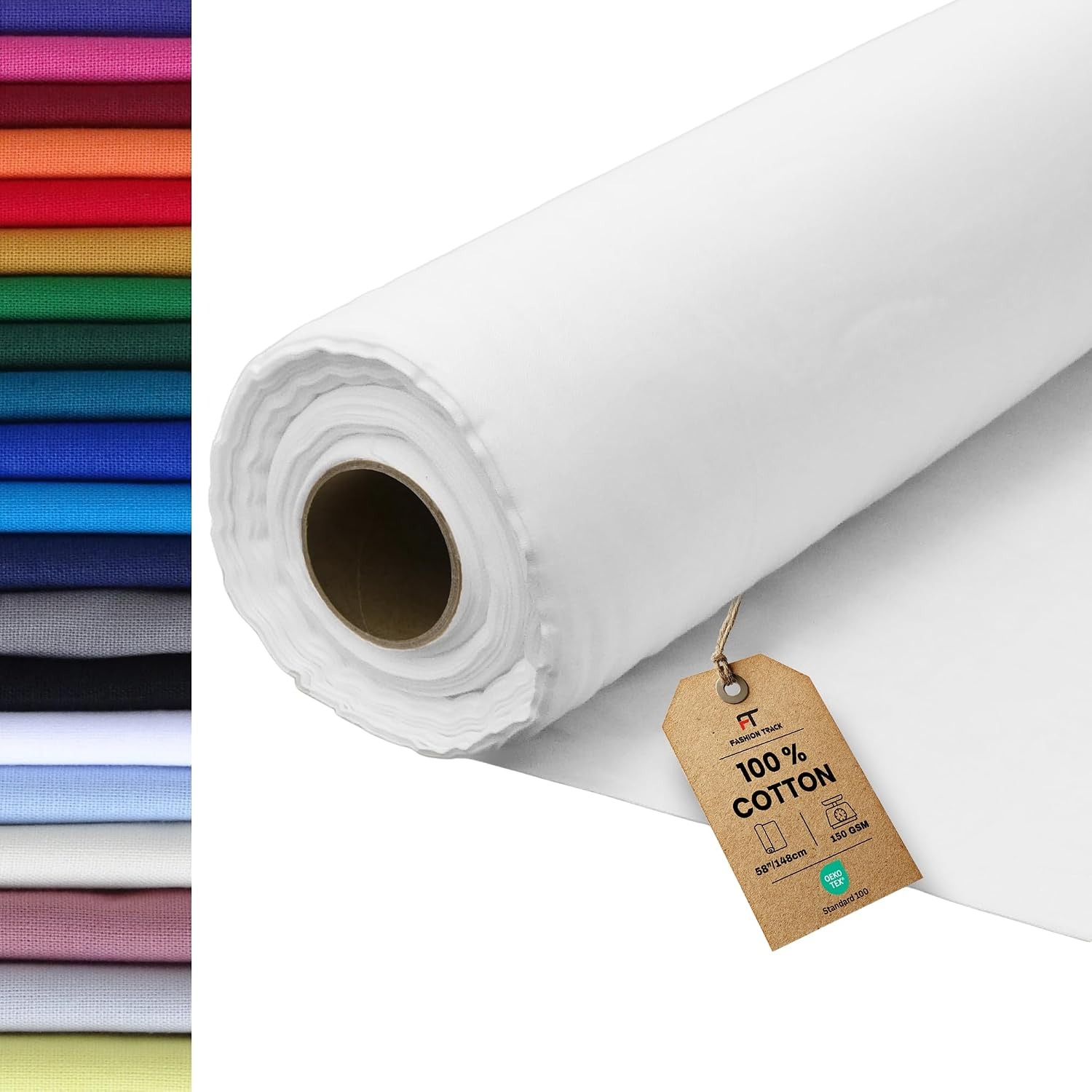
This white cotton fabric is supplied as one precut piece, 5 metres long and 147.5 cm (58 in) wide. It is listed as 100% cotton with a plain weave and a solid white finish. Suggested uses include dressmaking, quilting, curtain linings, pillowcases and tote bags.
Think of it as a starting material rather than a finished solution. The same piece can be considered for several types of sewing, but your chosen design determines whether it is the right match.
Understand what you are buying
The fixed size matters. This is not fabric cut to your requested length, and you are not choosing a quantity of individual metres. You receive one precut piece with the stated dimensions.
Before ordering, find the fabric requirements on your pattern. Look for the amount needed at a width close to 147.5 cm.
Check whether the stated requirement includes every part of the project. Pockets, ties, facings and handles all need space. If you plan to alter a pattern, draw the changed pieces before deciding that 5 metres will be enough. Small additions can affect the cutting layout more than you might expect.
How the cotton and weave affect your choice
The listed composition is 100% cotton. Its plain weave describes the basic crossing structure of the threads, while the solid white finish means there is no printed motif to position or match.
That can make layout planning less fussy than working with a large print. You still need to follow grainlines, check the fabric edges and place each piece as your pattern directs. A plain surface does not remove the need for careful measuring.
The maker describes the cloth as medium weight at 150 gsm and gives a thread count of 120. These details help describe it, but they do not tell the whole story. Drape, opacity and stretch performance are not specified.
Keep fabric weight and item weight separate
Fabric weight in gsm means grams per square metre. It describes the weight of a set area of cloth, which is useful when comparing fabrics.
The maker's description also gives an item weight of 150 g. That is a separate field, not another way of writing 150 gsm. It should not be used to calculate how much fabric you receive or to override the stated piece size.
For choosing a project, focus on the supplied dimensions and the fabric specification.
Choosing it for dressmaking
When considering plain cotton dressmaking fabric, start with the pattern's recommended materials. Look for a woven cotton requirement and check whether the design depends on a very light drape, a firm shape or stretch.
Do not swap it into a stretch pattern just because the colour works. Stretch performance is not stated by the maker. A design that relies on fabric stretching around the body needs the right material to achieve its intended fit.
White also deserves an opacity check. Hold the fabric over the background or undergarments you expect to use, in lighting similar to where the garment will be worn. If it needs a lining, include that extra material and work in your project plan. Avoid assuming that the listed weight guarantees coverage.
Planning quilting and smaller sewn pieces
Cotton fabric for quilting is one of the listed uses. A solid white can form part of a design with other fabrics, but compare the materials before sewing a large section. Differences in weight, care needs or shrinkage can affect the finished result.
Work out your cutting plan on paper first. Count the pieces, include seam allowances and leave enough room to square up edges where needed. A useful length can disappear quickly when a design uses many repeated shapes.
Smaller projects can also make good use of leftover sections. Keep usable offcuts together and label their measurements after cutting. This makes it easier to judge whether a remaining piece will suit a later repair, patch or small sewn item without unfolding everything again.
Pillowcases, bags and curtain linings
If you are choosing cotton fabric for pillowcases, measure the actual pillow rather than relying only on its size name. Your layout needs room for the body of the case, seams and the closure style.
Cotton fabric for tote bags needs a different set of checks. Think about what the bag will carry and how its handles attach. The listed fabric use does not establish a load rating. Follow a suitable pattern and assess whether the design calls for reinforcement or another layer.
Curtain lining fabric should be chosen with the room's needs in mind. This fabric is listed for curtain linings, but no blackout or thermal performance is given. If blocking light is the main goal, a white cotton lining should not be assumed to provide that function.
Check the piece before you prepare it
When the fabric arrives, keep the packaging while you inspect it. Check the colour, measure the piece and look over the surface before washing or cutting. This is also the point to compare it with your pattern and any fabrics it needs to match.
Do those checks in good light on a clean surface. If you are deciding whether the white shade suits an existing project, place the fabrics next to each other rather than comparing them from memory.
The return conditions matter here. Change-of-mind returns are available within 14 days of delivery only when the fabric is unwashed, uncut, unused and in its original packaging. Inspect first, then decide whether to begin preparation.
Washing and preparing for sewing
Machine washable cotton fabric can be useful for items that will need regular cleaning. The listed care method is machine wash, but no wash temperature or shrinkage percentage is specified.
Once you have decided to keep the fabric, prewashing before cutting can help account for possible cotton shrinkage. Follow any supplied care label and wash with similar colours. Avoid adding items that could transfer dye onto the white cloth.
Let the fabric dry according to any supplied guidance. Before pressing the whole piece, test a small section or offcut and check the result. Take time to smooth the fabric before laying out a pattern. Creases and folds can make accurate cutting harder, especially when several pieces must fit into a planned area.
Make a layout before making a cut
A full cutting plan is worth the effort, even for a simple project. Lay out all the pattern pieces first, including the small ones. Check that seam allowances are included where needed and that each piece follows the required grainline.
If your work surface is shorter than the fabric, support the unused length rather than letting it pull on the section you are measuring. Work in manageable areas, keeping the rest clean and out of the way.
For a new design, sew a trial seam on an offcut. Check your thread, stitch settings and seam finish there before using the main pieces. This is practical preparation, not a guarantee of any particular result. It gives you a chance to adjust your method while the main fabric is still intact.
Buying for a deadline or as a gift
If your project has a fixed date, confirm delivery timing before ordering. A delivery lead time is not specified by the maker, so leave room for both arrival and sewing preparation.
For a gift, think about the recipient's usual work. Someone who makes bags may have different fabric needs from someone who sews flowing garments. A fixed piece is easier to assess when you know the kind of pattern they plan to use.
Keep gifted fabric unwashed and uncut until they have checked it. Retaining the original packaging also helps preserve the stated change-of-mind return option.
The short version
This is one precut piece of white cotton, 5 metres long and 147.5 cm (58 in) wide. It has a plain weave and is listed for dressmaking, quilting and several home sewing uses.
Choose it by matching your pattern to the fabric, not by colour alone. Check width, length and the qualities your design needs. Inspect before washing or cutting, then prepare it with care. If it is not suitable, the stated return conditions give you a clear next step. Faulty or wrongly described goods are put right free of charge.