


The complete guide
Choosing and Fitting Cambric Dust Cover Fabric
When the underside is the only part that needs attention
A sofa can still be comfortable even when the cloth underneath has torn or started hanging loose. You might notice it while cleaning, moving furniture or reaching for something that rolled underneath. The visible upholstery may be fine, but the exposed base looks unfinished.
Cambric dust cover fabric is made for this hidden area. It covers internal parts and helps keep dust and dirt away from them. Replacing worn cloth is a focused repair, rather than a reason to change all the upholstery.
Before starting, check what has actually failed. Loose bottom cloth is one job. A cracked frame, broken spring or sagging seat support is another. New cloth can tidy the underside, but it cannot fix the structure above it.
What this piece provides
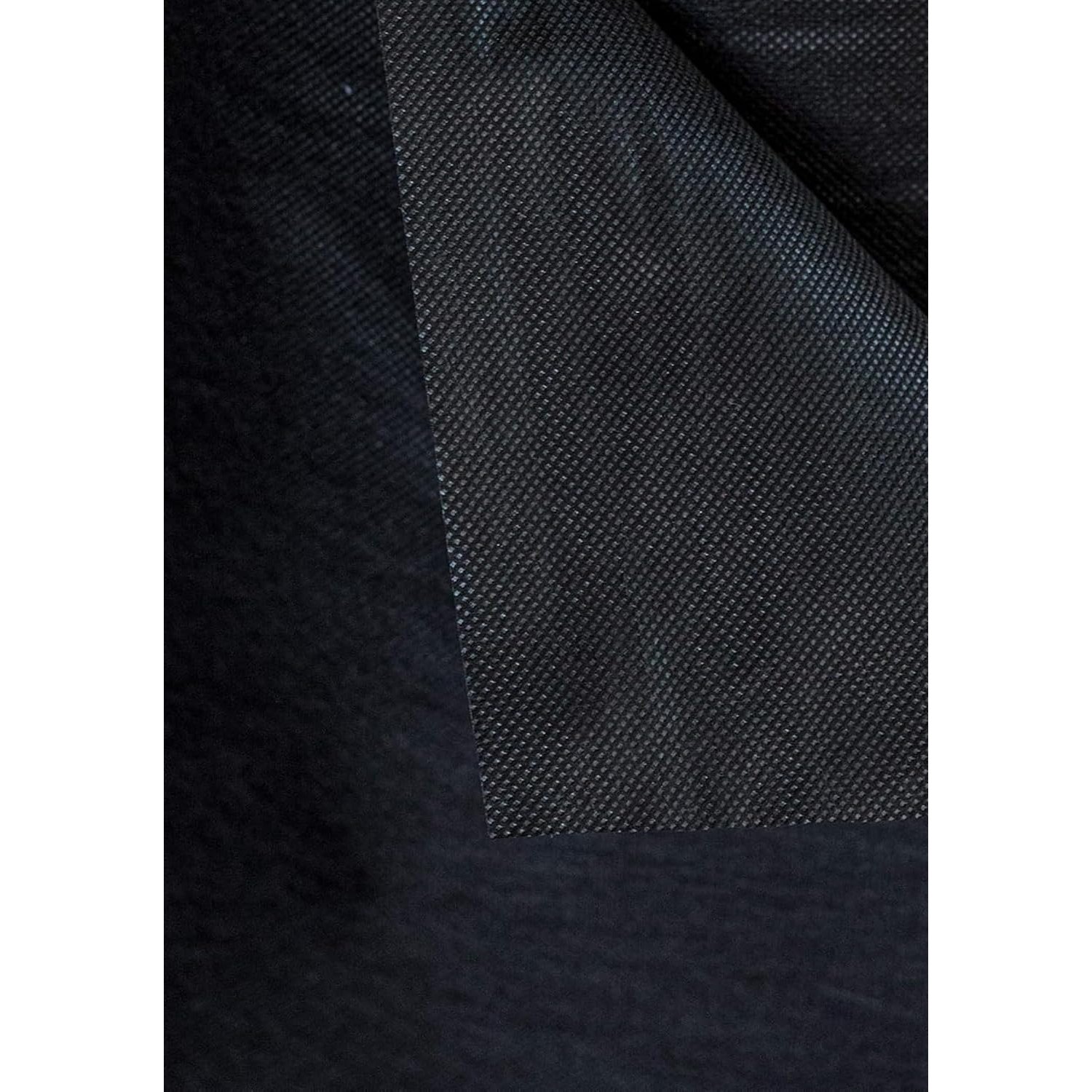
This product is one piece of black cambric fabric, 152 cm (60 in) wide and 3 yards (2.74 m) long. It is supplied in that size, not cut to your furniture measurements.
The product details describe non-woven polypropylene with stretch. The listed item weight is 231 g, and the fabric weight is 1.2 oz per square yard. Those figures describe different things. One is the weight of the item; the other describes the fabric per unit of area.
Its job is to create a tidy underside covering. The black cloth conceals springs, screws, staples and other internal components. Think of it as a finishing layer, not a load-bearing part of the furniture.
How a dust cover works
Upholstery underlining fabric spans an opening beneath a piece of furniture and attaches around suitable edges. It places a layer between the internal parts and the space below.
This helps reduce direct exposure to dust and dirt, but it does not turn the base into a sealed enclosure. The maker does not give a filtration rating or claim a dustproof seal. Gaps around legs and fittings may still be needed.
The cloth can be cut, folded and stapled. Its stretch helps with shaping around corners, though no stretch percentage is stated. Use that flexibility to improve the fit, not to make an undersized piece reach farther than planned.
Which projects suit this fabric?
Sofa dust cover replacement is a common use. If the couch bottom fabric has split but the rest of the furniture is sound, replacing just that layer can make sense.
Chairs and ottomans are also listed applications. Their smaller openings may leave material for another repair, but this depends on your cutting layout. Do not assume that one piece will cover a set of chairs without measuring every opening.
A box spring dust cover is another possible project. Recliners are also listed, though their moving parts need special care during fitting. In every case, the opening size, fixing edges and access matter more than the furniture's name.
Measure the opening, then the fixing area
Start by measuring the full underside area you want to cover. Details its length and width, then look at where the new cloth will attach. You need enough fabric to reach those fixing points and allow for folded edges.
Do not measure only the damaged patch if you intend to replace the whole cover. A small tear may sit in a much larger panel. Equally, do not rely on a sofa's advertised width, since that may include arms and other parts outside the underside opening.
Compare your measurements with the supplied piece in both directions. Turning a cutting layout around may help, but the stretch should not be treated as extra guaranteed coverage. Leave a practical allowance rather than planning an exact edge-to-edge fit.
Plan before making the first cut
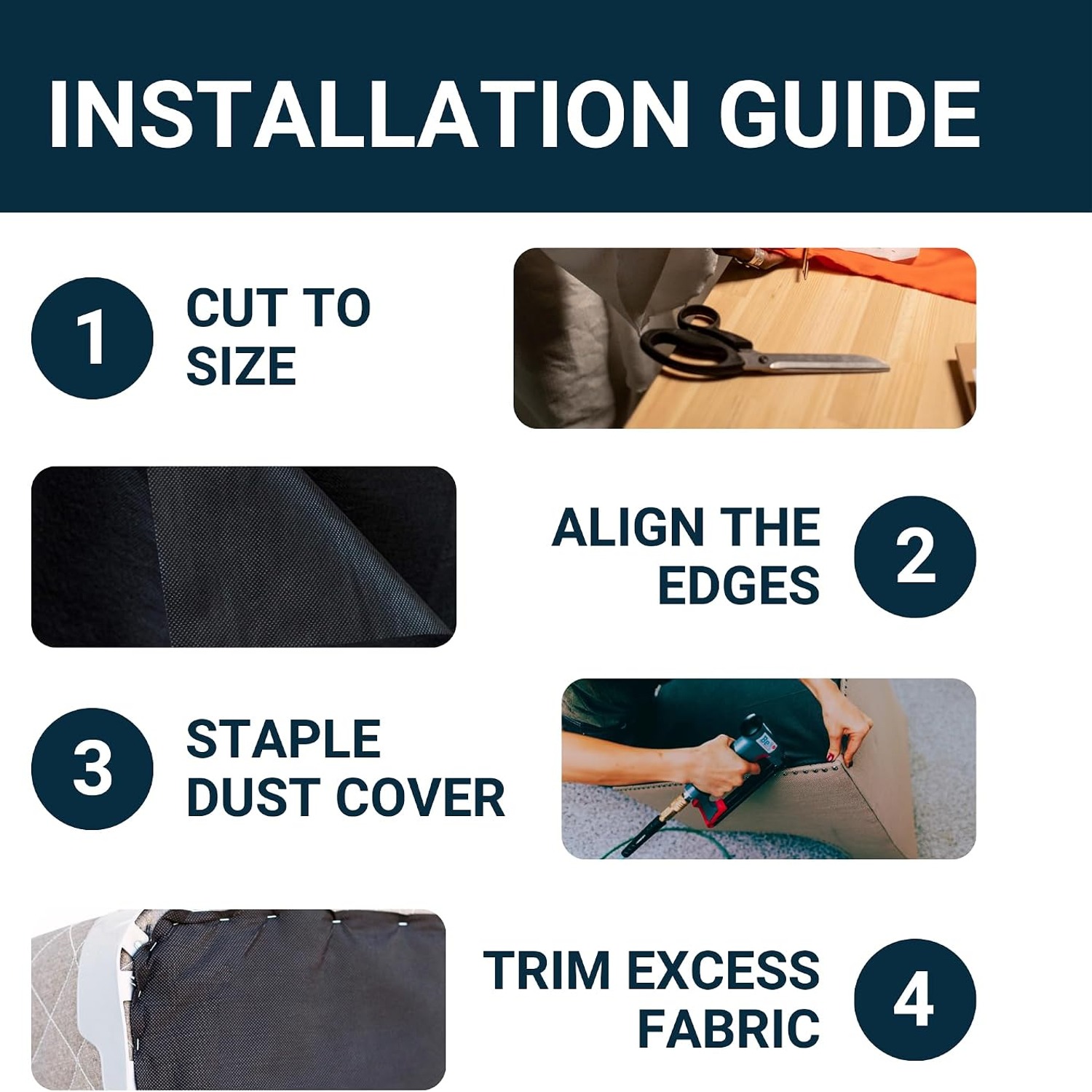
Lay out your measurements on paper before cutting the actual fabric. This is especially useful when one piece will become several chair covers or a mix of smaller panels.
Include the folded edges in each shape. Mark any openings needed for legs, brackets or other fittings. A simple drawing can reveal that two panels fit side by side, or that one large panel uses nearly the whole piece.
Keep the fabric uncut while checking suitability. Once you cut it, you lose the option of a return under the stated change-of-mind conditions. Taking a few extra minutes at this stage is easier than trying to recover a piece cut too small.
Prepare the furniture safely
Clear enough room to work without balancing furniture against a wall or another unstable surface. Large sofas and bed bases may require another person to help turn and support them. Do not work beneath furniture that could fall or shift.
Before removing the old cover, look at how it was fitted. A photo can help you remember the edge folds, attachment points and any openings around fittings. Treat the old cloth as a reference, not proof that the same placement was correct.
Remove loose old fasteners carefully and inspect the frame beneath. If you find damage, stop and assess it before fitting the new cover. Hiding a fault under fresh cloth does not resolve it.
Fit for an even finish
Position the replacement cloth so the allowance is spread around the edges. Check that the whole opening is covered before fastening any section permanently.
For a suitable frame, the product information describes stapling as a fitting method. Choose fasteners and tools to suit the furniture, and check what lies behind each fixing point. Avoid placing fasteners near mechanisms or other parts that could be damaged.
Work gradually around the opening, keeping the cloth even. Fold edges where appropriate and avoid pulling hard to remove every small ripple. A neat surface is the aim, but excessive tension puts strain on the fabric and its fixing points.
Pause during fitting to check that the piece has not shifted. Small corrections are simpler before the entire edge is secured.
Pay attention to moving parts
A recliner dust cover needs more planning than a simple fixed chair base. Fabric must stay clear of the moving mechanism, including parts that change position as the chair opens or closes.
Do not bridge a moving gap simply because it looks untidy when the chair is still. The cloth could catch or pull loose when the furniture moves. If you cannot tell which areas need clearance, seek advice from an upholsterer.
The same care applies to ottoman hinges and other moving fittings. A finished underside should not interfere with how the furniture works. Appearance comes after a clear, unobstructed mechanism.
Know when to choose a different fabric
Black upholstery fabric can describe many different products, so check the intended role rather than shopping by colour alone. This cloth is for furniture undersides. It is not described as a cover for seats, cushions or decorative panels.
The maker does not specify waterproof performance, outdoor suitability or a fire rating. If your repair has a particular performance requirement, do not assume this fabric meets it.
Likewise, cambric fabric for upholstery is not a substitute for structural webbing or spring repairs. If the seat itself is dropping, investigate the support system. A new underside cover may be the last step after repairs, but it should not be the only step.
Care after fitting
Once the cloth is in place, check for loose edges and spots where it might rub against a fitting. Look again after moving the furniture, since handling can expose a snag or loosen an edge.
Remove loose surface dust gently. Avoid dragging sharp cleaning attachments across the cloth or pulling it away from its fixings. If there is a tear, assess whether a fresh panel would be more sensible than repeatedly tightening the damaged area.
No washing instructions are supplied. Seek advice before washing the fabric or applying cleaning products, rather than assuming that care advice for other polypropylene items will apply here.
Check delivery and returns before starting
If you need the repair finished by a certain date, confirm the delivery estimate before ordering. A lead time is not specified by the maker, so leave room in your plans rather than taking the furniture apart in advance.
When the piece arrives, check it against your project before washing, cutting or using it. Keep the original packaging while you decide.
Returns are available within 14 days of delivery for unwashed, uncut, unused fabric in its original packaging. The customer pays return postage for these returns. Faulty or wrongly described goods are put right free of charge.
The short version
This black cambric cloth is a finishing material for furniture undersides. It suits measured repairs where one piece, 152 cm (60 in) wide and 3 yards (2.74 m) long, provides enough coverage and edge allowance.
Measure carefully, check the frame and plan your cuts. Fit the fabric evenly without over-stretching it, and keep every moving part clear. For sound furniture with worn bottom cloth, it offers a straightforward way to restore a tidy hidden surface.