
The complete guide
A Practical Guide to Choosing Extra Wide White Polycotton Fabric
More room for the project you have in mind
A sewing project can become more complicated when your fabric is too narrow. A large panel may need a join, a backing may need piecing, or your pattern layout may leave more waste than you expected. Checking width at the start helps you avoid those surprises.
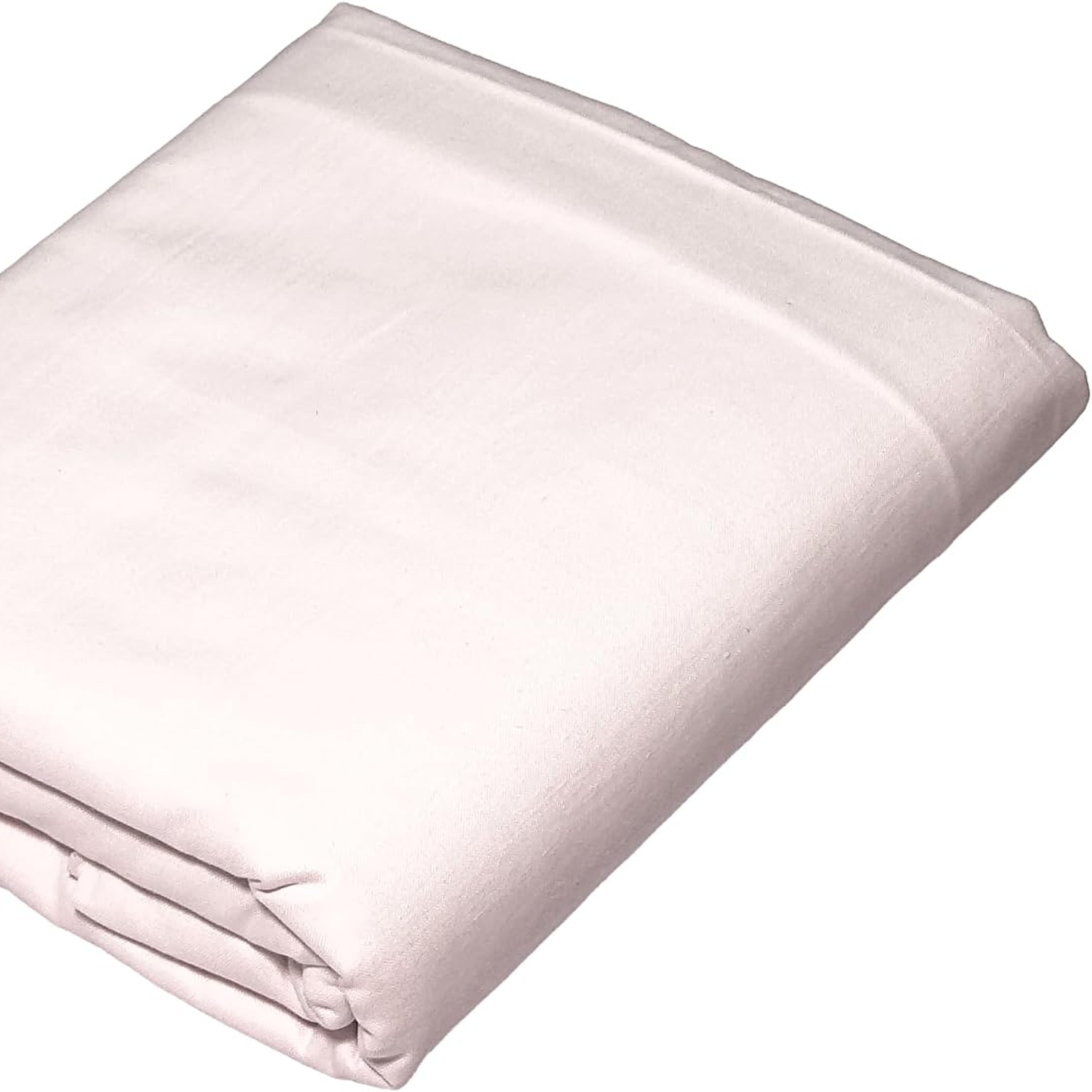
This polycotton fabric is supplied as one precut piece measuring 3 metres long and 238 cm wide. It is plain white, with a solid pattern and a plain weave. That gives you a simple starting point for sheeting, dressmaking, crafts and home textile projects.
The useful question is not just whether you have enough metres. It is whether the full shape of your project fits inside the fabric, with room for seams, hems and preparation. A little planning before ordering makes that much easier to judge.
Know exactly what you are buying
This is one fixed piece. Your cutting plan needs to work within the stated 3 metre length and 238 cm width.
You may find this page while searching for white polycotton by the metre. Here, that search term describes the type of fabric, not a choice of custom lengths. If your project needs more than one piece, do not assume separate orders will arrive as a continuous length.
The width is also described as 94 inches. For precise work, use the stated metric size and keep your measurements in the same unit throughout your plan. This avoids small conversion differences building up across several pattern pieces.
Before you wash or cut, unfold the fabric and check that it matches your order. Keep its packaging until you have decided to keep it.
Understand the blend and weave
The listed composition is 52% polyester and 48% cotton. That makes it a cotton blend rather than pure cotton. If your sewing pattern names a particular fibre content, compare that requirement with this blend before choosing.
The weave is listed as plain, and the fabric is also described as poplin. These details help identify the type of material, but they do not tell you everything about its feel. The maker does not state its drape, opacity, stretch or fabric weight per square metre.
The listed item weight is 800 g. Do not treat that figure as a GSM rating.
When comparing white poplin fabric, look beyond the name. Your project's needs matter more than a broad fabric label, especially for fitted clothing or items with a specific structure.
Make the extra width work for you
Wide width fabric can give you more options when arranging large shapes. A panel that would need joining on narrower cloth may fit across this piece. Whether that works depends on your finished dimensions and the allowances your project needs.
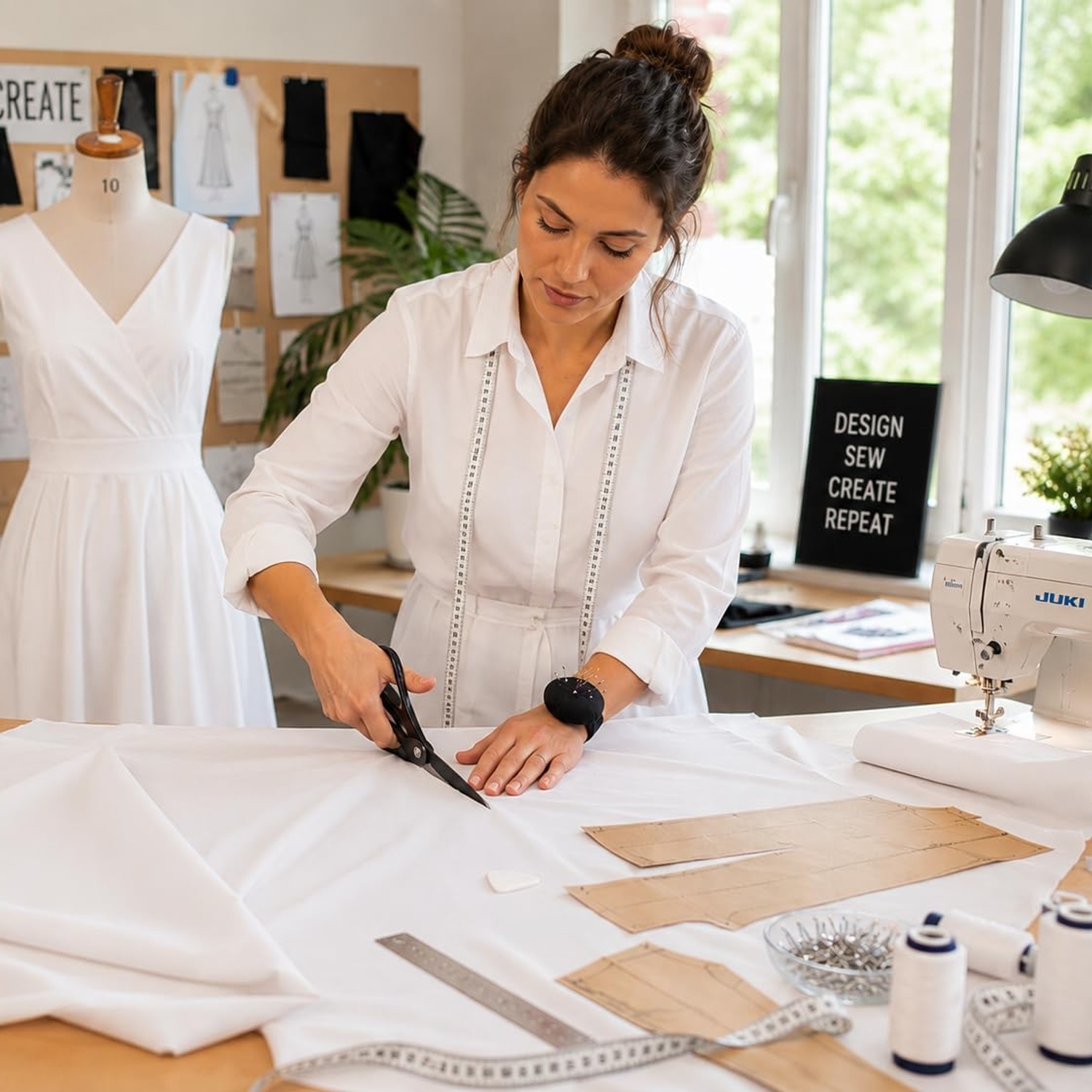
Start with a paper plan. Draw the available rectangle and place your pattern pieces inside it, keeping their grain direction in mind. Include every piece, not just the main panels. Facings, ties, hems and small finishing parts can use more cloth than expected.
Do not rotate pattern pieces simply to make them fit unless the pattern allows it. Fabric direction can affect how a finished item hangs or behaves. Width gives you room, but it does not remove the need to follow the cutting instructions.
If you are adapting a pattern written for a narrower fabric, work out a fresh layout. Its printed fabric allowance may not translate neatly to a 238 cm width.
Planning sheeting and bedding projects
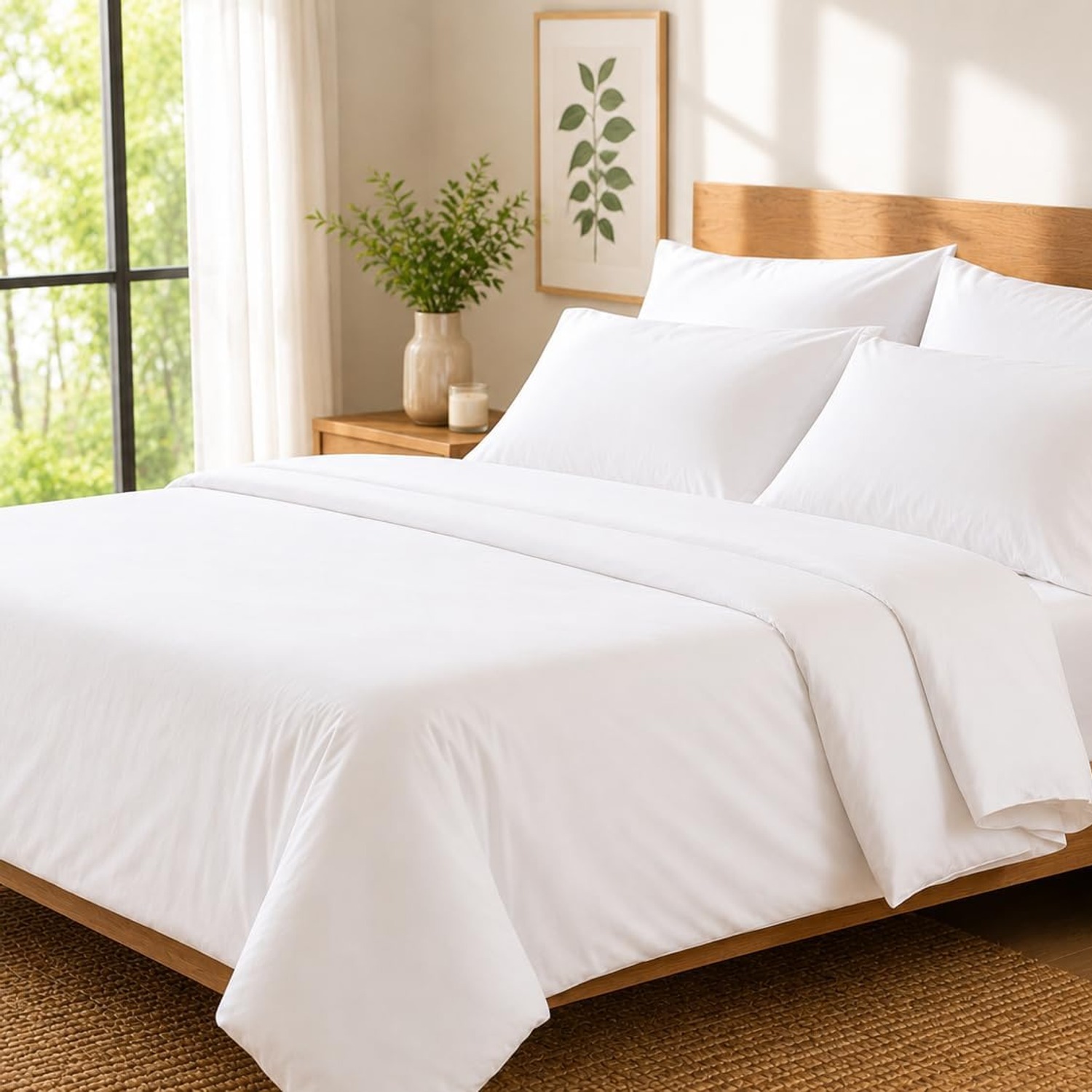
Sheeting is a listed use for this fabric. The broad width makes polycotton sheeting worth considering when you want to plan a large, plain panel.
Measure the item you want to cover rather than relying on a bed-size name. For a flat sheet, the finished panel needs enough room for the coverage and hems you want. For a fitted design, depth and corner construction also affect the amount of material needed.
A 3 metre piece is a starting size, not a promise that every bedding project will fit. Draw the full cutting shape before ordering. If the design needs elastic, trims or other supplies, plan those separately.
This is bedding sewing fabric, not finished bed linen. You will need to cut and sew it to your own design, and assess the fabric in person before deciding whether it gives the finish you want.
Choosing it for clothing and costumes
Dressmaking is another listed use, along with clothing, costumes and lining. Plain white sewing fabric can suit projects where the cut or added details are the main focus.
Begin with your pattern's fabric recommendations. Check whether it calls for woven cloth, stretch, a certain weight or a specific drape. Stretch is not stated for this product, so it should not be chosen on the assumption that it will work with a stretch-dependent pattern.
For pale garments, opacity deserves particular attention. Hold the fabric against the intended background and view it in different light before cutting. You may decide your design needs a lining, but that is a project choice rather than a feature promised by this product.
For costume making, test a small sample with your planned seams and trims. A quick trial can show you whether your construction method gives the shape you want.
Crafts, quilting and home sewing
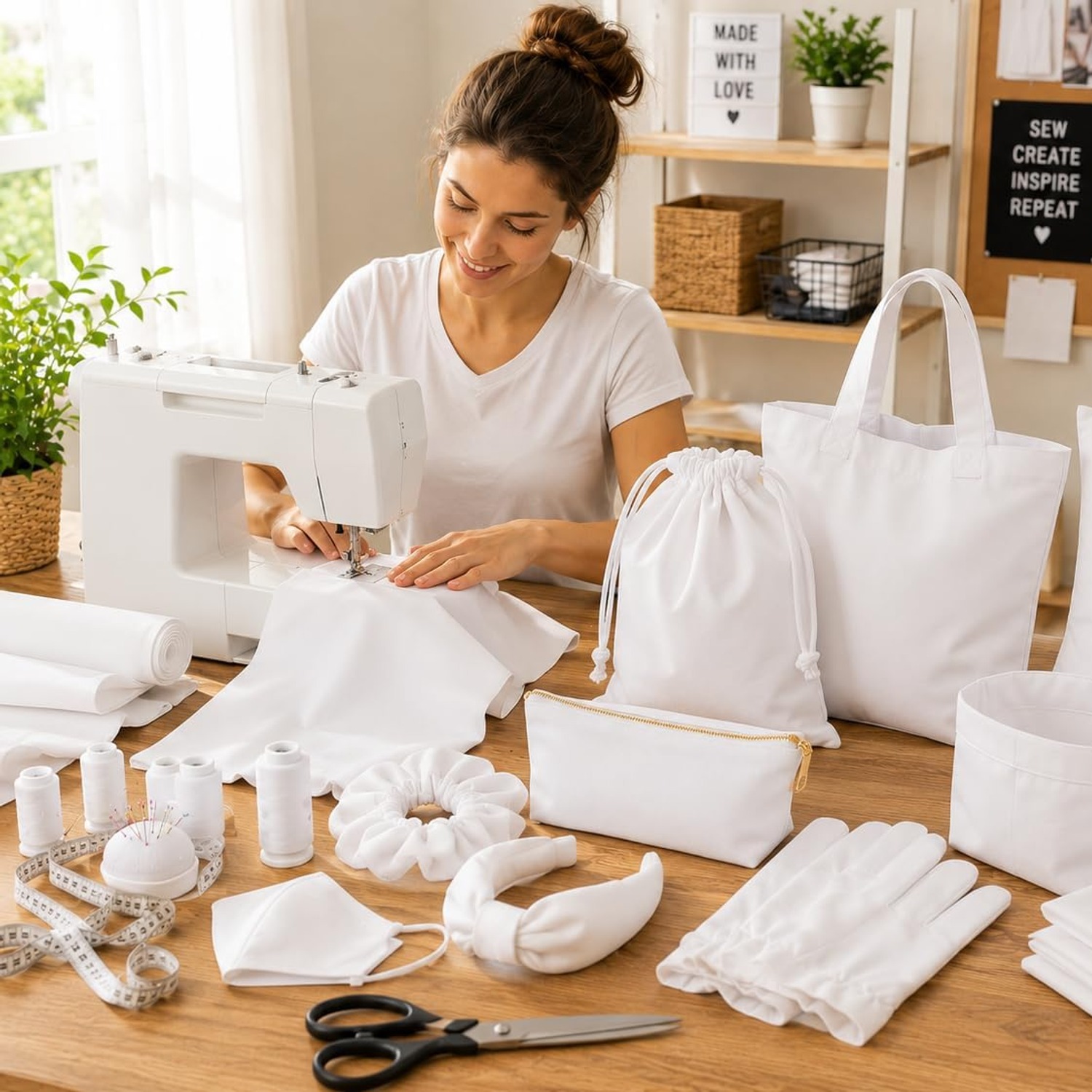
The listed uses also include crafts, quilting and home textiles. A solid white base leaves room for your own design choices, from contrasting stitching to added fabric details.
If you are considering quilt backing fabric, compare the full quilt dimensions with the available piece. Your quilting method may require backing that extends beyond the quilt top. Include that allowance before deciding that the width is enough.
For smaller crafts, arrange the largest shapes first and fit smaller parts into the spaces left over. Keep useful offcuts for testing stitches or practising a finish. That can save you from experimenting on a main piece.
For home textile fabric, judge each project separately. A simple decorative panel has different needs from an item exposed to strong wear or moisture. No waterproof rating is provided, so do not rely on this material for weather protection.
Check what the maker does not tell you
Good fabric buying includes noticing the missing details. Here, the maker does not state GSM, shrinkage rate, exact opacity or a measured stretch value. Specific washing and ironing temperatures are also not supplied.
Those gaps do not automatically rule the fabric out. They mean you should avoid building your project around an unconfirmed feature. If exact drape or a precise finished size is essential, seek the missing information before ordering.
The same care applies to dyeing and printing. A polyester and cotton blend needs products suited to its fibres, and no results are supplied for this fabric. Test your chosen process before treating the whole piece.
There is also no basis for assuming it meets a special performance requirement. Choose a fabric with confirmed specifications when your project depends on one.
Care starts before the first cut
Machine washing is listed in the care details. The maker does not give a wash temperature, dryer setting or ironing temperature, so follow any care instructions supplied with the fabric.
First inspect the whole piece while it is still unwashed and uncut. Once you are happy to keep it, consider how the finished project will be cleaned. Testing a small offcut can help you check for changes before preparing the main fabric.
Do not assume there will be no shrinkage. No shrinkage rate is stated. Projects with close-fitting covers or exact dimensions need particular care during preparation and measuring.
Test pressing on an offcut too. Start cautiously and check the result before moving to a visible panel. Store the remaining fabric clean and dry so it is ready for your next sewing session.
Delivery, gifts and returns
We sell in New Zealand, but a delivery lead time is not specified by the maker. Check the available delivery information before making plans around a sewing date. Leave time to inspect the fabric and prepare it before work begins.
A precut piece can also be a useful gift for someone who sews. It helps to know what they enjoy making and whether white polycotton fits their plans. A fixed piece is easier to assess when the recipient already has a project in mind.
Returns are available within 14 days of delivery if the fabric is unwashed, uncut, unused and in its original packaging. The customer pays return postage. Faulty or wrongly described goods are put right free of charge.
The short version
Choose this piece if your project calls for plain white polycotton and fits within 3 metres by 238 cm. Its extra width offers room for larger layouts, while the fixed precut format keeps the supplied quantity clear.
Check your pattern, allow for finishing and inspect the fabric before washing or cutting. Those simple steps help you decide whether this is the right starting point for what you want to make.