
The complete guide
A Practical Guide to Choosing Gold Charmeuse Satin Fabric
Start with the project, not just the colour
Gold fabric can be the detail that brings a sewing project together. The harder part is knowing whether the piece you buy will actually fit your pattern. A lovely colour will not help if there is too little length for a runner or not enough room to cut a lining.
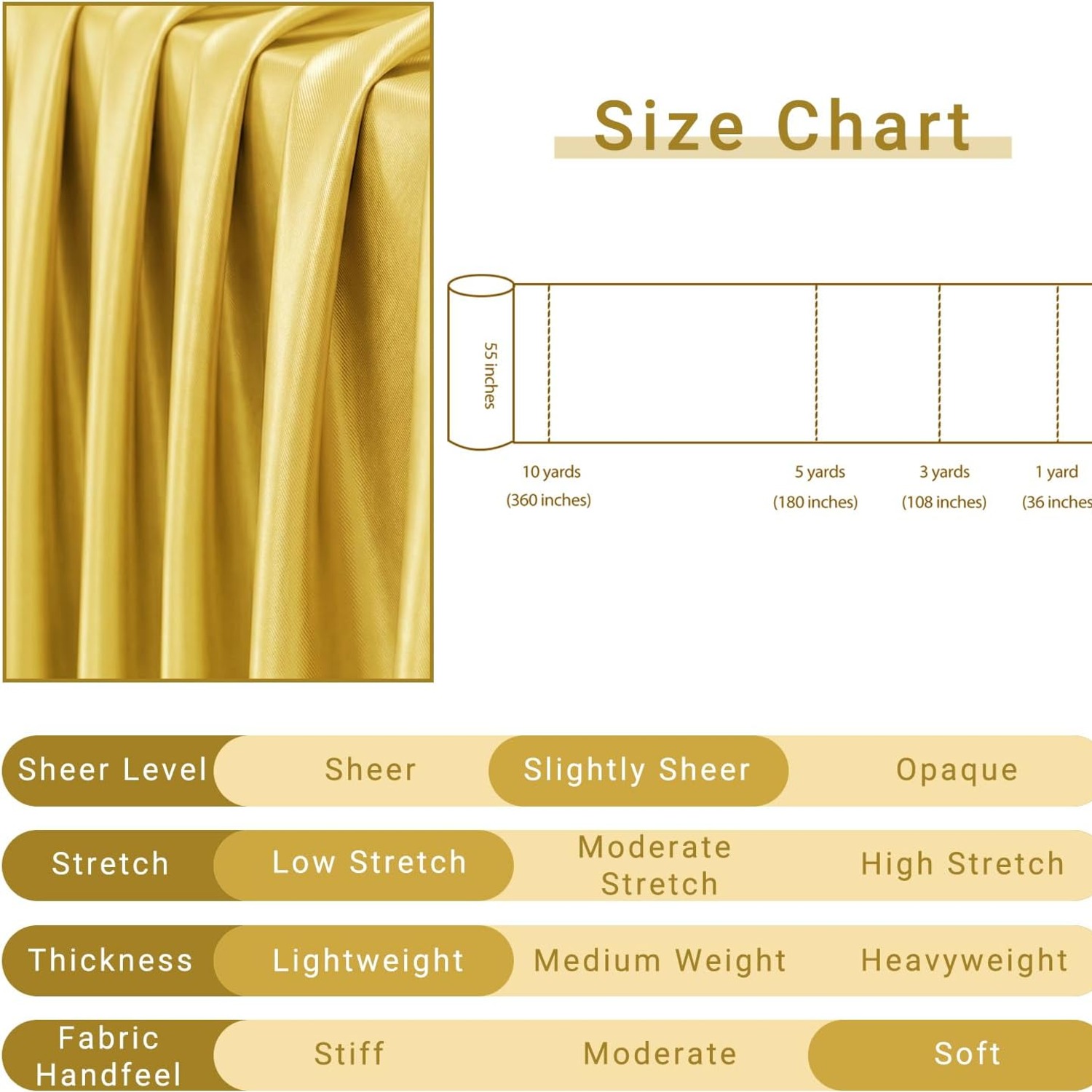
This satin fabric is supplied as one piece, one yard long and approximately 140 cm wide. It offers a defined amount for smaller projects, decorative accents and accessories. It is not a finished item, and this product does not offer a custom cutting service.
Before ordering, decide what you want to make and write down its finished measurements. Then add the fabric needed for seams, hems and any folds. That simple check is often more useful than choosing by a project photo alone.
Understand what you are buying
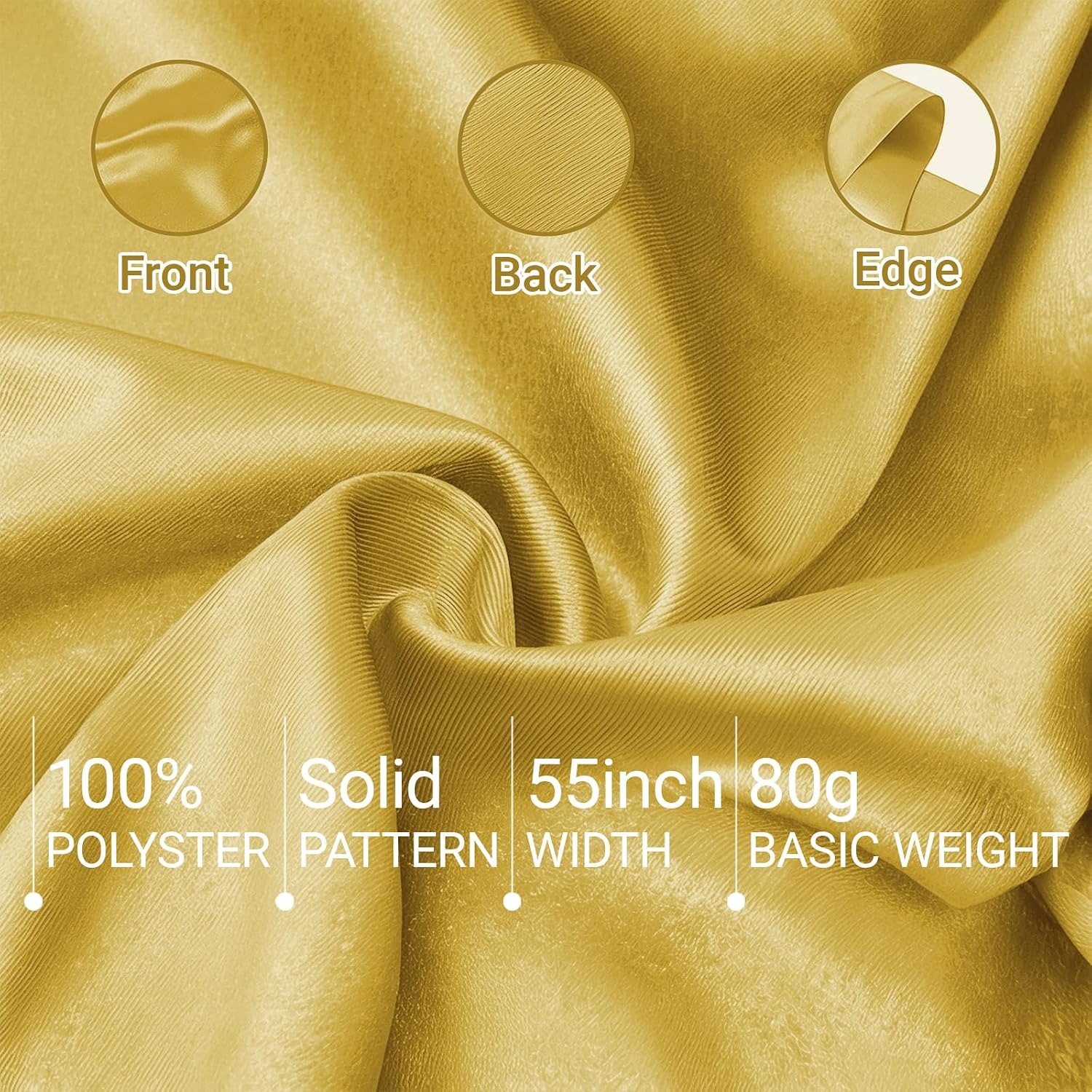
The fabric is described as gold charmeuse satin. Its composition is listed as 100% polyester, with a satin weave and a solid pattern. That distinction matters because satin is not another word for silk. It describes a fabric construction, while polyester identifies the fibre in this piece.
The supplied item weight is 132 g. A fabric weight per square metre is not stated, so that item weight should not be treated as a published fabric-weight rating. Stretch and opacity are also not specified.
If your pattern calls for a particular weight, stretch percentage or level of coverage, check those needs before committing. The product name alone cannot answer every sewing question. For a project where those details are essential, ask for clarification rather than assuming this piece will behave like another satin you have used.
Check the length and width carefully
The detailed fabric measurements are 91.4 cm long by 139.7 cm wide. In rounded terms, that is a one-yard piece about 91 cm by 140 cm. There is one item in the pack.
When shopping for satin fabric by the yard, it is easy to focus on length and overlook width. Both matter. A wide pattern piece may fit across the fabric, while a long panel may exceed the available length even when the total area seems generous.
Lay out your paper pattern pieces within a rectangle matching these dimensions. Keep seam allowances in the plan, and leave space for any required edge finishing. Do not assume that turning a pattern piece sideways is suitable. Follow the pattern's grain direction and layout advice.
For larger projects, do not assume that ordering more than one item will produce a continuous length. This product describes a single one-yard piece, not a made-to-measure length.
Choose a project that suits one yard
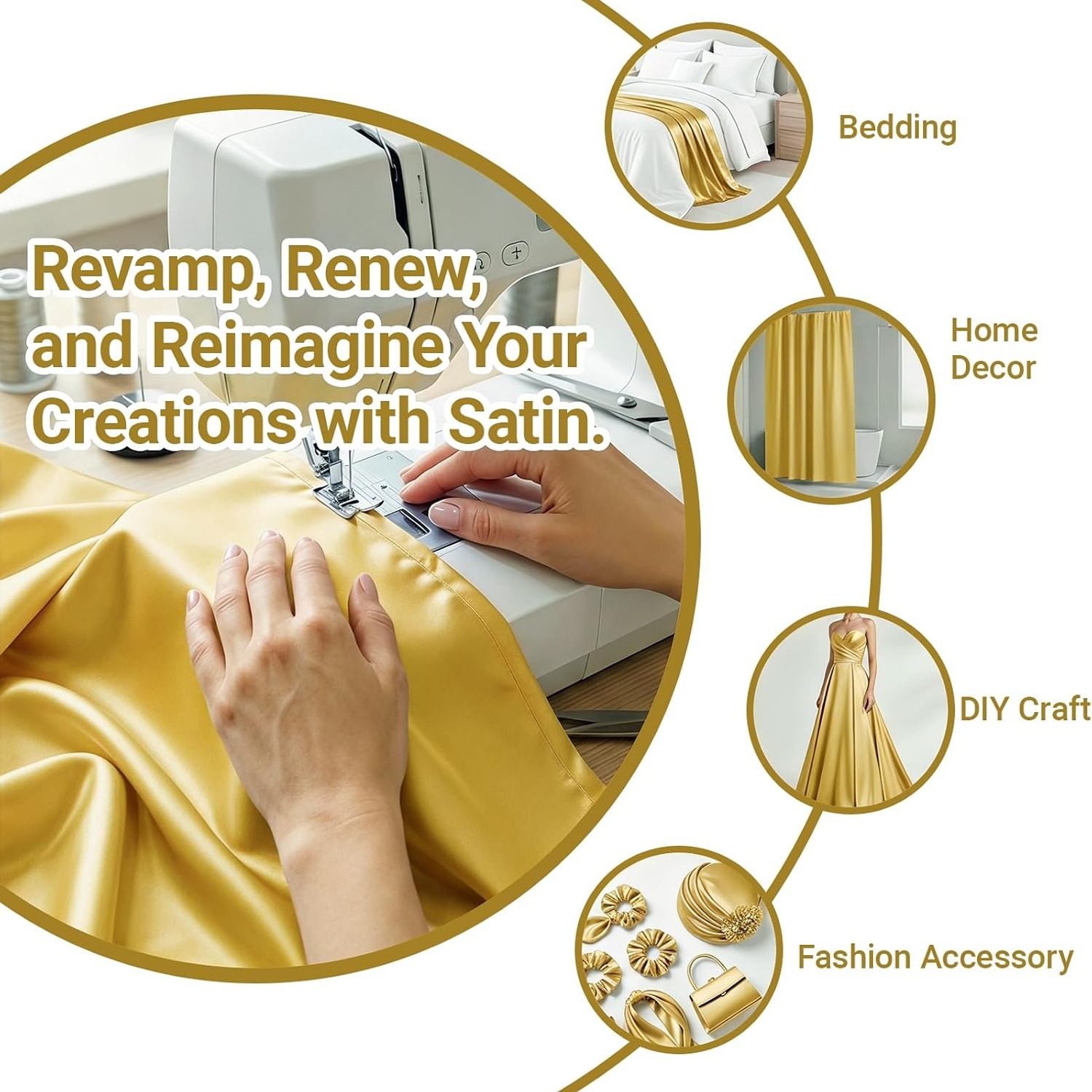
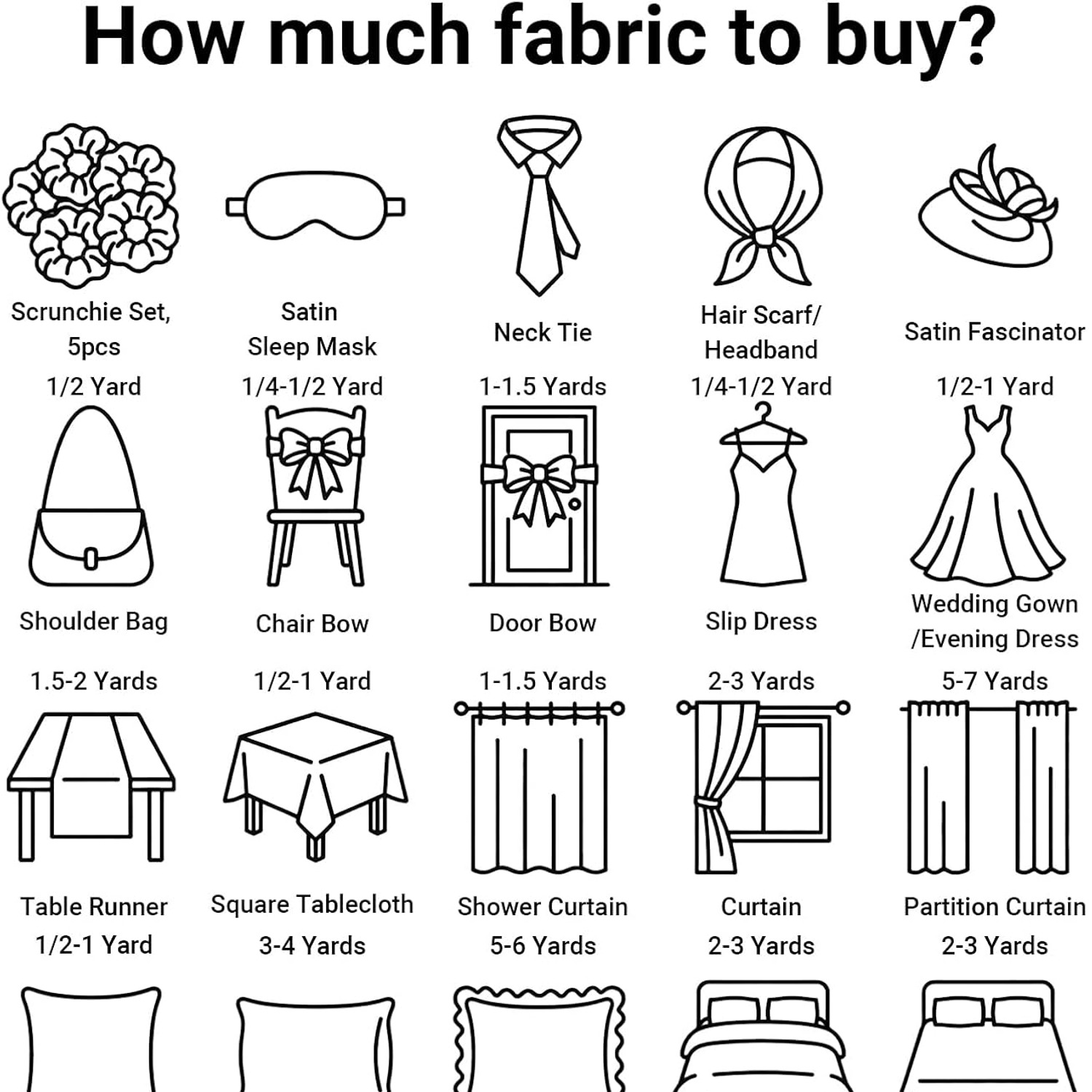
A smaller project is a practical way to make use of a defined piece. Scrunchies, gift bags and decorative bows are among the suggested uses. Each still needs a pattern or a clear cutting plan, but they let you work on a smaller scale than a full garment.
Satin scrunchie fabric needs to accommodate the fabric casing and its seam allowances. Elastic is a separate supply, not an included part of this product. If you hope to make several, draw the full cutting layout before deciding how many the piece will yield.
Gift bags offer another option. Consider the space needed for a folded top or a closure as well as the bag itself. Small leftover sections may be useful for matching details, though the amount available will depend on your main project.
Think through clothing and lining uses
Gold dressmaking fabric can provide a contrasting detail or become part of an accessory. A sash, scarf or garment panel may be worth considering if your pattern fits the piece. A full dress or other large garment needs its own yardage check.
For satin lining fabric, compatibility matters as much as appearance. Compare the lining requirements with the outer fabric and the way the finished item will be cleaned. A lining should not introduce a care method that conflicts with the rest of the garment.
This fabric's instructions say not to iron. That is worth considering before choosing a pattern that relies on frequent pressing to form its shape. If you are uncertain, choose a simpler project or seek sewing advice for the construction you have in mind.
No stretch specification is provided. Avoid treating it as a substitute for stretch fabric without further information.
Plan table and event decorations to scale
Gold satin fabric is suggested for wedding and home decor, including table accents and chair bows. Start by measuring the space rather than assuming one piece will cover it.
For a table runner, decide how wide you want it and how far it should extend along the table. Include the hem allowance at both ends and along the sides. The usable finished size will be smaller than the unsewn piece.
Chair bow fabric needs enough length for the route around the chair and the bow itself. Chair shapes vary, so test the required length with a strip of spare material or another measuring aid before planning a set.
For wedding decor fabric, timing matters too. Allow time to receive the piece, inspect the colour and complete the sewing. A delivery lead time is not given by the maker, so confirm the current estimate before relying on it for a fixed date.
Use gold as a deliberate colour choice
This is a solid gold fabric rather than a printed design. That can make it easier to plan a single-colour detail, but an exact shade reference is not given by the maker.
If the fabric must match existing decorations or clothing, leave room for a real-world colour check. Screens and room lighting can change how a colour appears. A product image is a useful guide, not a guarantee of a precise match.
Think about how much gold your project needs. A small bow or trim section makes a different choice from a broad table panel. Planning the visible area can help you decide whether this one-yard satin fabric is enough without buying for a vague idea.
Keep any exact-match requirement in mind before washing or cutting the piece.
Prepare before you cut
When the fabric arrives, inspect it while it is still unused. Check that the colour, amount and condition are right for your project. Keep the original packaging until you are sure you want to proceed.
Clear a flat work area large enough to support the fabric. Place your pattern pieces first, then check the layout a second time before cutting. This is especially helpful when one piece must provide several parts of the same project.
Use a spare section to test your stitching setup where possible. Needle choice, thread and machine settings should suit the work you are doing. They are not specified or supplied as part of this fabric description.
For a first project with satin craft fabric, a straightforward shape gives you fewer construction steps to manage. There is no need to begin with the most complex item on your sewing list.
Follow the stated care limits
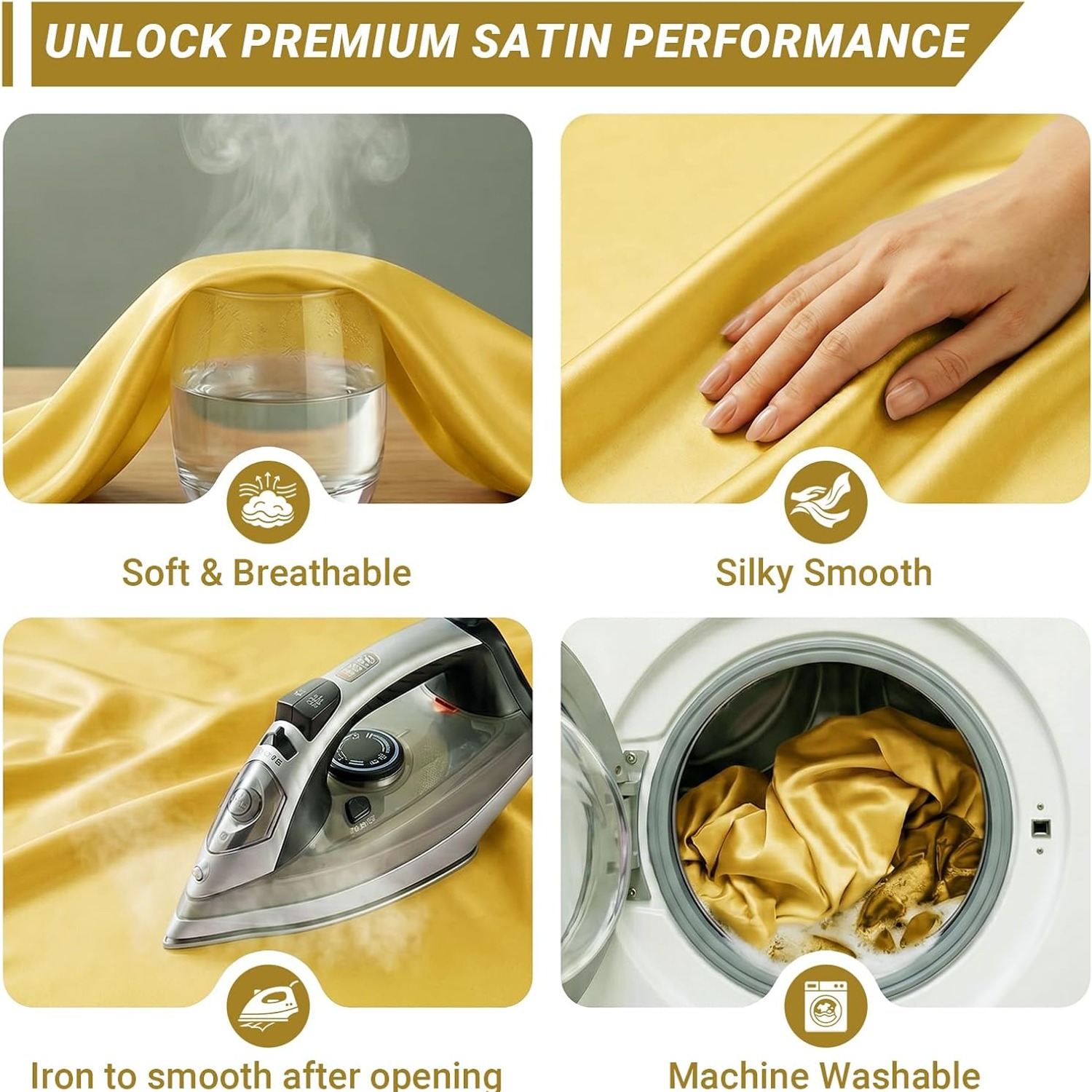
The supplied care guidance calls for machine washing separately in cold water on a gentle cycle. If bleach is needed, only non-chlorine bleach is allowed.
Air drying, line drying and tumble drying on low heat are listed options. Do not iron or dry clean the fabric. These limits should guide both your construction plan and how you care for the finished item.
A finished project may contain elastic, thread, trims or another fabric. Check their care requirements too. The fabric's washing instructions do not automatically establish that every added component can follow the same routine.
If you intend to wash the fabric before sewing, first complete your inspection and decide to keep it. Washing changes its eligibility for a change-of-mind return under the stated policy.
Decide whether it suits a gift
A piece of gold sewing fabric may be a thoughtful gift for someone who enjoys making accessories or decorations. It is most useful when you know their preferred colours and have some idea of the scale of their projects.
Be clear that this is fabric rather than a finished scarf, bonnet or pillowcase. The recipient will need a suitable pattern and any extra supplies.
If you are making a gift yourself, work backwards from the date you need it. Leave time for sewing and checking the result, not just delivery. A small, well-planned project is often a more manageable choice than one that uses every last centimetre.
Keep your return options open
Returns are available within 14 days of delivery for fabric that is unwashed, uncut, unused and in its original packaging. The customer pays return postage for a change-of-mind return.
That makes the first inspection important. Check the piece before starting a project rather than cutting a sample immediately. If something seems wrong, contact us and explain the issue.
Faulty or wrongly described goods are put right free of charge. Keep that separate from simply choosing a fabric that does not suit your plan. In either case, raising the question promptly helps avoid uncertainty.
The short version
Choose this gold charmeuse satin fabric when a solid polyester satin suits your project and a one-yard piece fits your cutting plan. It is a possible starting point for accessories, lining and decorative sewing, not a promise that every suggested item will fit.
Measure first, allow for finishing and check the care limits. Once those details work for your project, you can choose the gold finish with a clearer idea of what you will make.