
The complete guide
A Practical Guide to Choosing Red Polka Dot Cotton Poplin
Start with the project, not just the print
A fabric can catch your eye before you know what to make with it. Red polka dots are easy to picture in a dress, a small bag or a bright patchwork panel. The harder part is knowing whether the piece is the right size and type for the job.
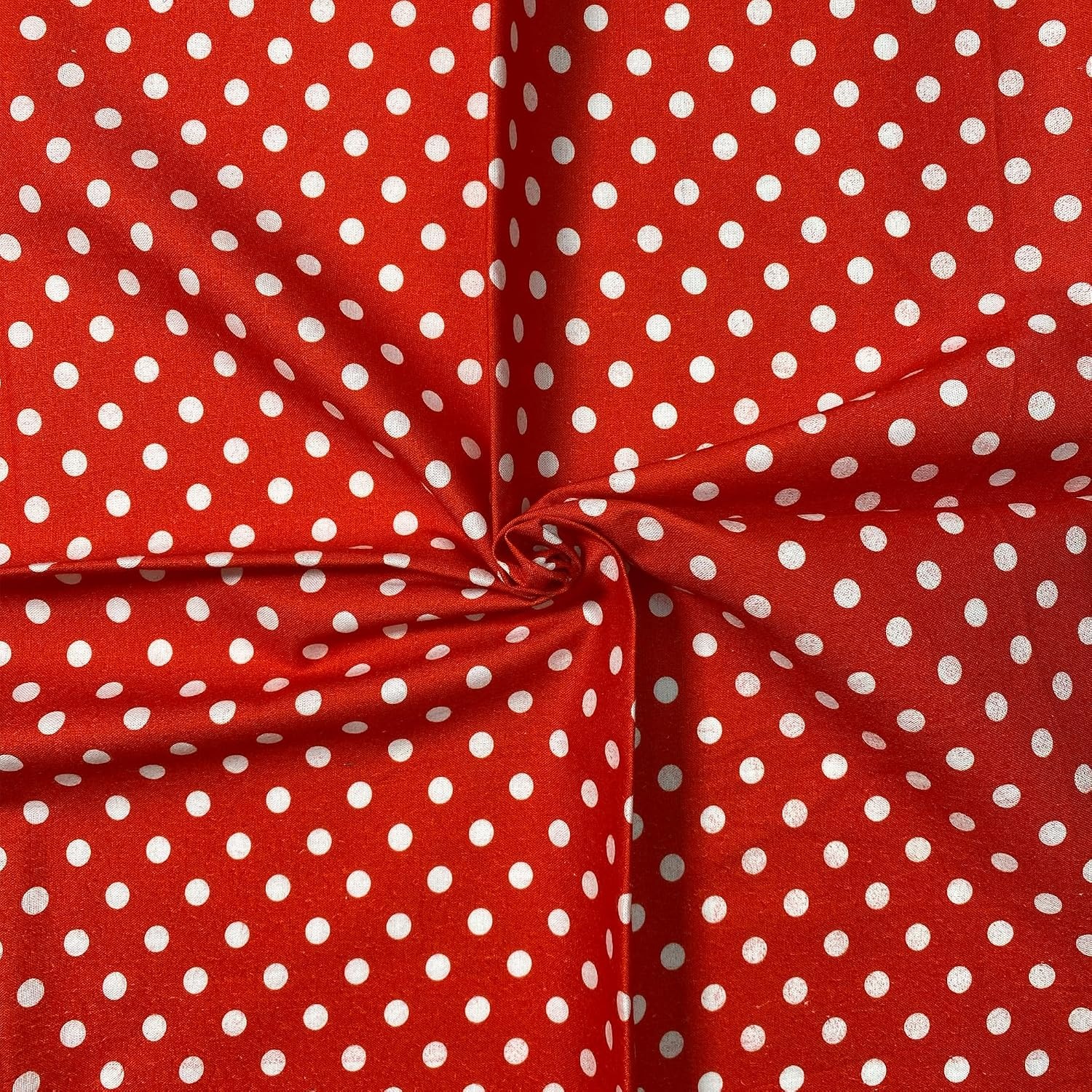
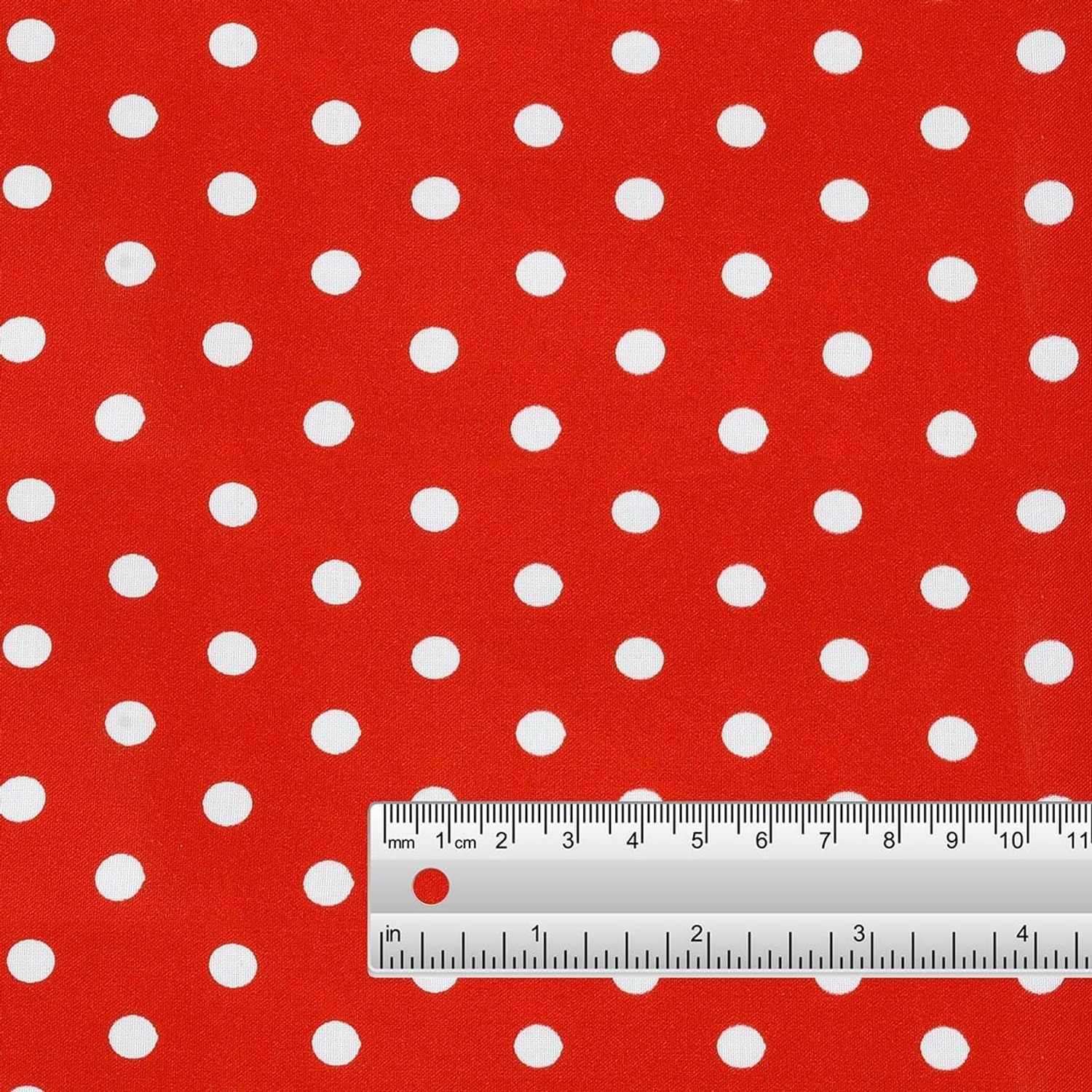
This polka dot fabric comes as one precut piece, 1 metre long and 111 cm (44 in) wide. It is cotton with a poplin weave, and the dots measure 8 mm. Those are useful starting points, but they do not replace the fabric requirements on a sewing pattern.
Before ordering, decide what you want the fabric to do. A decorative pocket has different needs from a fitted blouse. A patchwork block needs much less fabric than a full skirt. Matching the piece to a clear plan helps you avoid running short halfway through cutting.
What cotton poplin tells you
Cotton describes the material. Poplin describes the weave. Together, they identify this as cotton poplin fabric rather than a stretch knit or a finished sewn item.
The maker's description names dressmaking, quilting, crafts and home décor as uses. That gives you several directions to consider, but it does not mean every project in those groups will suit this particular piece. Your pattern still needs to match the fabric and the amount available.
Some useful details are not stated. There is no stretch measurement, opacity rating or shrinkage rate. The listed weight is 150 g, but that is an item weight, not a stated fabric weight per square metre. If your pattern calls for a certain GSM, ask for confirmation rather than treating those figures as the same thing.
Understand the precut size
This is a fixed piece of precut cotton fabric. It is not a service where fabric is cut to your requested length. Plan around the supplied 1 metre length and 111 cm width.
Start by reading the fabric chart for your chosen pattern size. Use the requirement closest to the actual supplied width, and check the cutting layout rather than relying on a general estimate.
If a design needs more than one metre, buying extra pieces may not solve the problem. A long skirt panel or another large shape may need an unbroken length. Multiple quantities are not promised as a continuous piece, so confirm that point before ordering.
Leave room in your plan for seam allowances and any preparation before cutting. A layout that only just fits on paper may leave little room for adjustments.
Judge the pattern at the right scale
The 8 mm dots give you a stated pattern size to work with. That matters when deciding how the print will look on a finished item.
On a small piece, such as a pocket or patchwork block, only part of the pattern may be visible. Across a larger panel, the repeated dots become more of the overall look. Think about both views before you cut.
Red spotted cotton fabric can be a starting point for a retro-inspired project, but the print does not set the whole style. Shape, buttons and contrasting fabric will all affect the result. A simple design may let the dots stand out, while a mixed-fabric project can use them as a smaller accent.
The separate dot colour is not stated by the maker. If an exact colour match matters, seek clarification before buying coordinating materials.
Planning clothing with a small piece
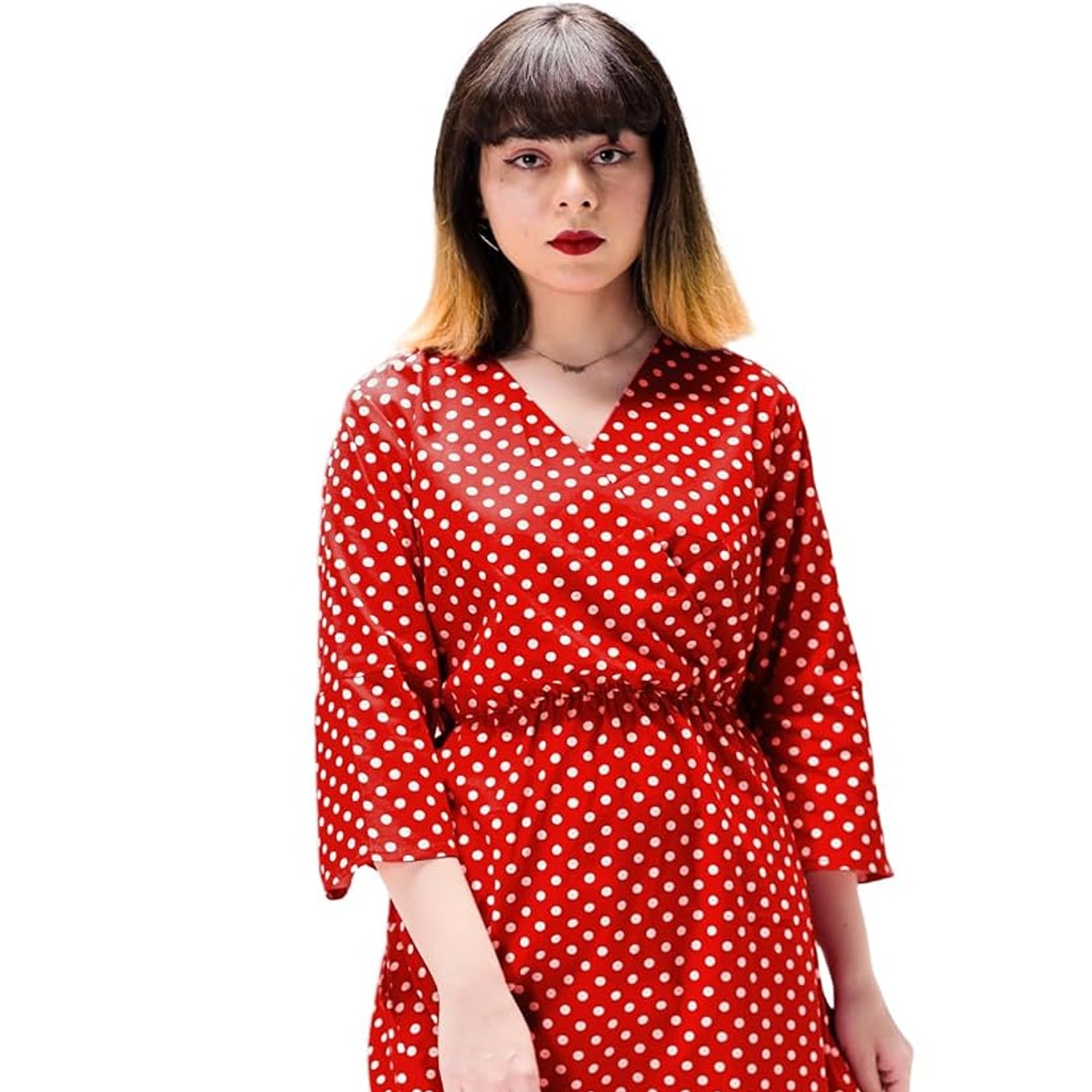
Dresses, shirts and blouses are listed uses, but a listed use is not a promise that one piece will make a complete garment. Size, sleeve shape, skirt fullness and pattern layout all change the amount needed.
When choosing fabric for dresses, start with the exact pattern and size you intend to sew. If the full garment will not fit, consider whether the design allows a contrasting bodice, pocket or panel. Only make that change if it works with the pattern's construction.
The same approach applies when selecting fabric for blouses. Check the required width and length first. Also check whether the pattern calls for stretch, a particular drape or a lining, since those details are not all supplied here.
For children's clothing, use a pattern suited to the intended garment. No safety certification is stated, so do not assume one from the suggested uses.
Patchwork, crafts and smaller projects
A defined precut size can make planning small projects more straightforward. You know the starting dimensions and can sketch a cutting layout before committing to a design.
As cotton patchwork fabric, this piece can be considered for blocks, borders or smaller patterned sections. Count each cut shape with its seam allowance included. If you want the dots to sit in a particular way, allow extra room for positioning rather than packing every shape tightly together.
The source details include an unexplained Quilted feature. That is not enough to confirm batting, backing or a finished quilted construction. If you need those features, ask before ordering.
For craft fabric projects, begin with a template or finished-size plan. Small accessories and decorative details may be options, but the fabric is only one part of the build. Closures, interfacing and other supplies should come from your project's instructions.
Using the print around the home
Home décor is another listed use. Think of the fabric as a patterned material for a planned sewing project, not as a promise of performance in every room.
A decorative panel or small fabric accent may have modest demands. Seating, outdoor items and light-blocking window treatments need specific properties that are not stated by the maker. Do not assume upholstery strength, weather resistance or blackout performance.
Check the full dimensions of your proposed item, including hems, seams and any overlap. A finished size can look small enough for the piece while still needing more fabric once construction allowances are added.
If you are combining this home decor fabric with another material, consider care as well as colour. The completed item needs a care method that suits all its parts.
Prepare before the first cut
When the fabric arrives, inspect it before washing or cutting. Check the piece against your order and look it over while it is still unused. Keep the packaging until you are sure you will keep it.
Next, review your pattern layout. Place paper pieces within the available dimensions and check their orientation. Taking a few extra minutes here is easier than trying to replace a section after it has been cut too short.
For a washable project, consider how you will prepare the fabric before sewing. The maker does not state a shrinkage rate, so no exact allowance can be promised. Remember that washing changes your return options under the stated policy.
If you are unsure about an important property, such as coverage or stretch, resolve it before cutting. Those checks are especially useful when sewing clothing.
Care for the fabric and finished item
Machine washing at 30°C is the stated care instruction. Drying instructions and an ironing temperature are not given by the maker by the maker, so check any care label that comes with the piece.
Test an uncertain care method on a small offcut before using it on the main project. Keep that test piece with your sewing notes if you want a reference for later.
A finished item may need different treatment because of its other parts. A lining, zip or decorative trim can affect washing and pressing choices. Plan those materials together rather than choosing them only for appearance.
Store the unused fabric somewhere clean and dry. Keeping it folded with your pattern and project notes can also help you remember what it was bought for.
Delivery, returns and sewing gifts
No delivery lead time is stated in the maker's description. Check the available delivery information for your New Zealand address before planning a sewing session around its arrival.
If the fabric is a gift, the recipient's project matters as much as their taste in prints. A one metre fabric piece is most useful when they can work within that size. Gift packaging is not specified.
For a change-of-mind return, the fabric must be unwashed, uncut, unused and in its original packaging. The return window is 14 days from delivery, and the customer pays return postage. Faulty or wrongly described goods are put right free of charge.
The short version
Choose this red cotton fabric when its polka dot design, cotton poplin weave and precut size fit your project. You receive one piece measuring 1 metre by 111 cm, with 8 mm dots and a listed 30°C machine wash.
Check the pattern layout first, ask about any missing detail that matters, and inspect the piece before washing or cutting. A little planning gives the fabric a clear job from the moment it arrives.