
The complete guide
Choosing Green Shade Cloth for Your Garden or Patio
Start with the space that needs shade
A sunny garden can be pleasant early in the day, then hard to use once the sun reaches a patio or a row of pots. Moving furniture may help for an hour. Moving established plants is often less practical. Shade cloth gives you another way to manage the light reaching a chosen area.
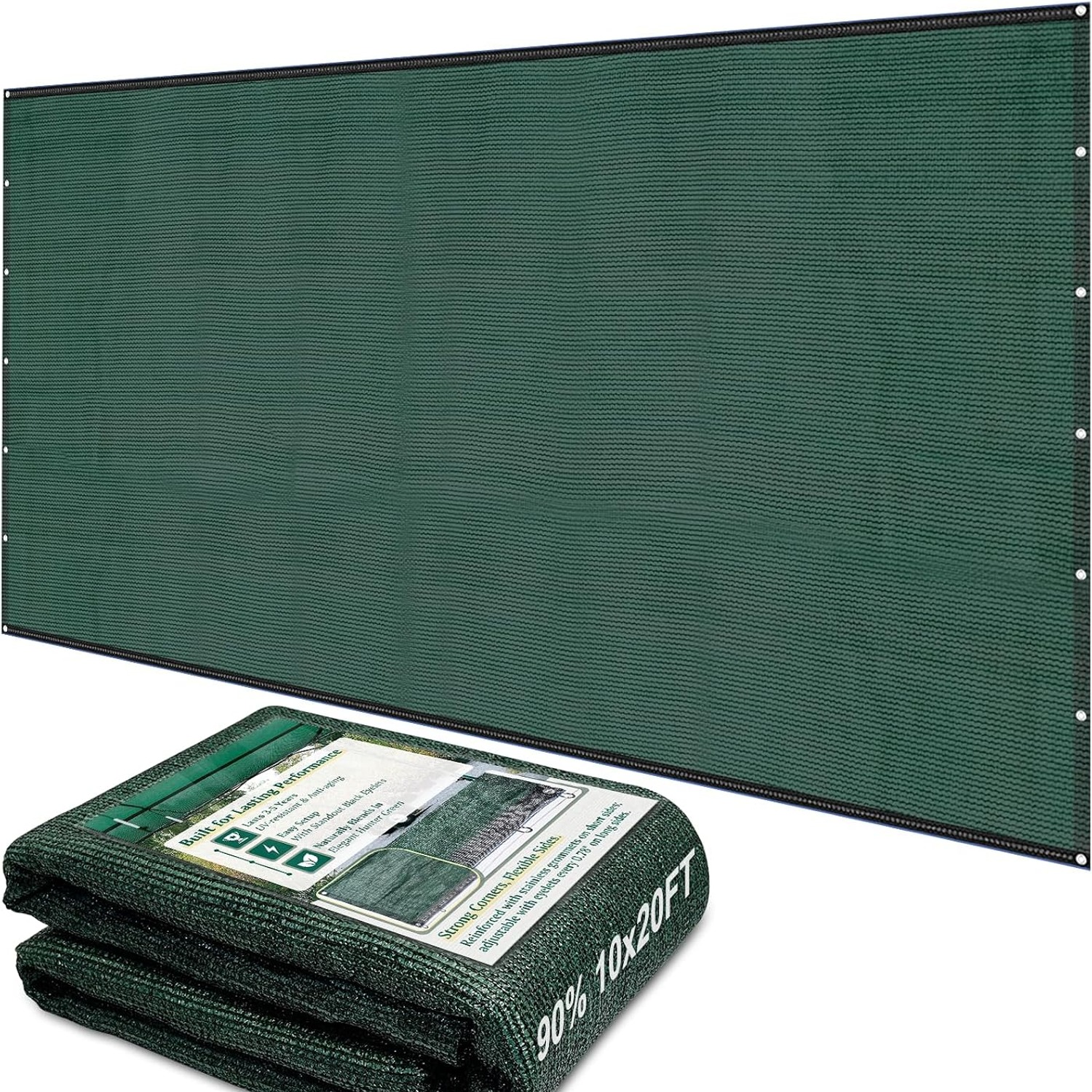
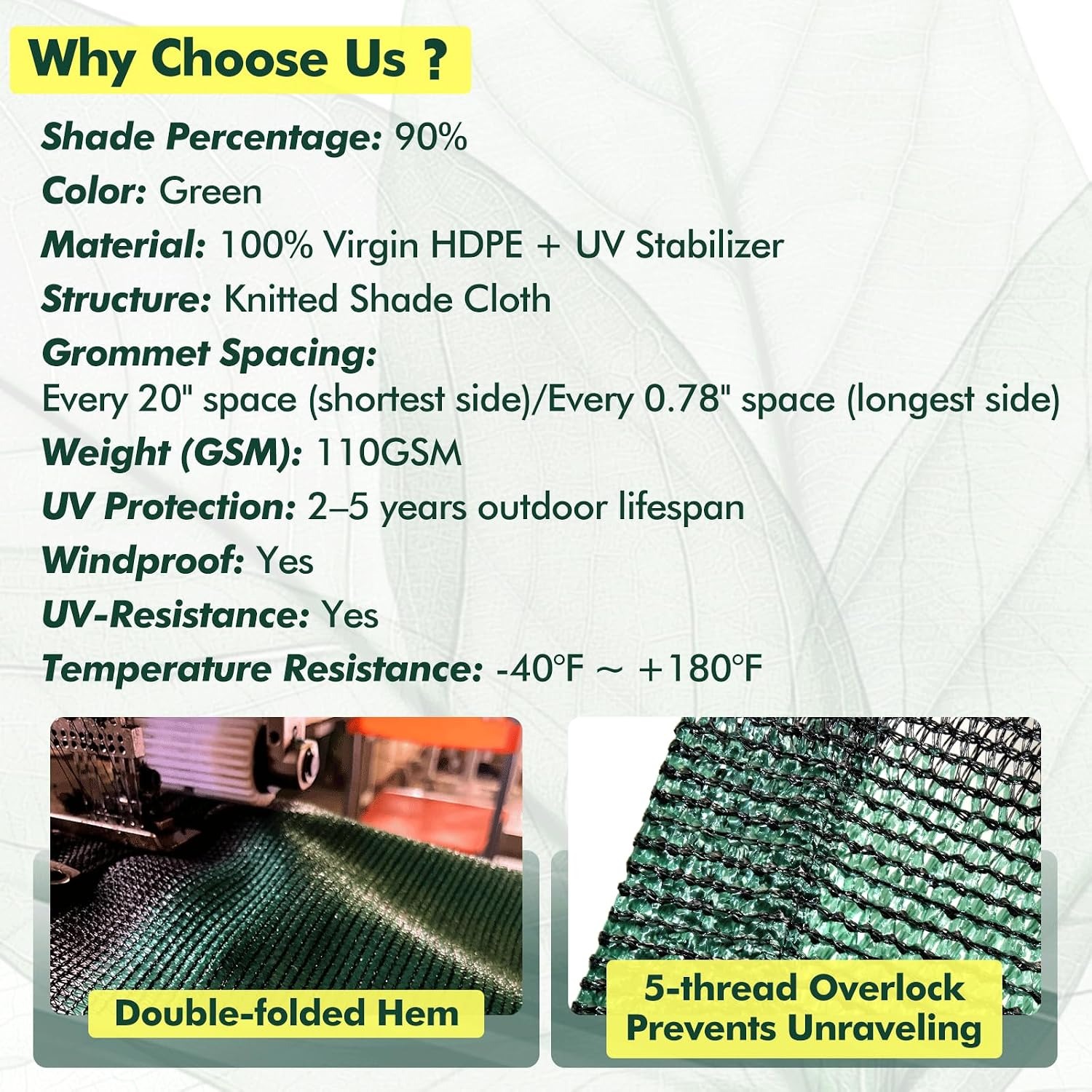
This product is one green 3 x 6 m panel with a 90% shade rating. It has reinforced edges, double-stitched seams and grommets spaced every 50 cm.
The useful question is whether that size and shade level suit your space. Start with the problem you want to solve, then check the panel against your measurements, supports and daily sunlight.
What a 90% shade rating tells you
The shade rating describes the level of shading offered by the fabric. A 90% shade fabric is a dense option, so it deserves more thought than simply choosing the darkest panel available.
Strong shade can be useful where direct sunlight is unwanted. It can also remove too much light from plants that need a bright position. Think about what will sit beneath the mesh and how long it will be covered each day.
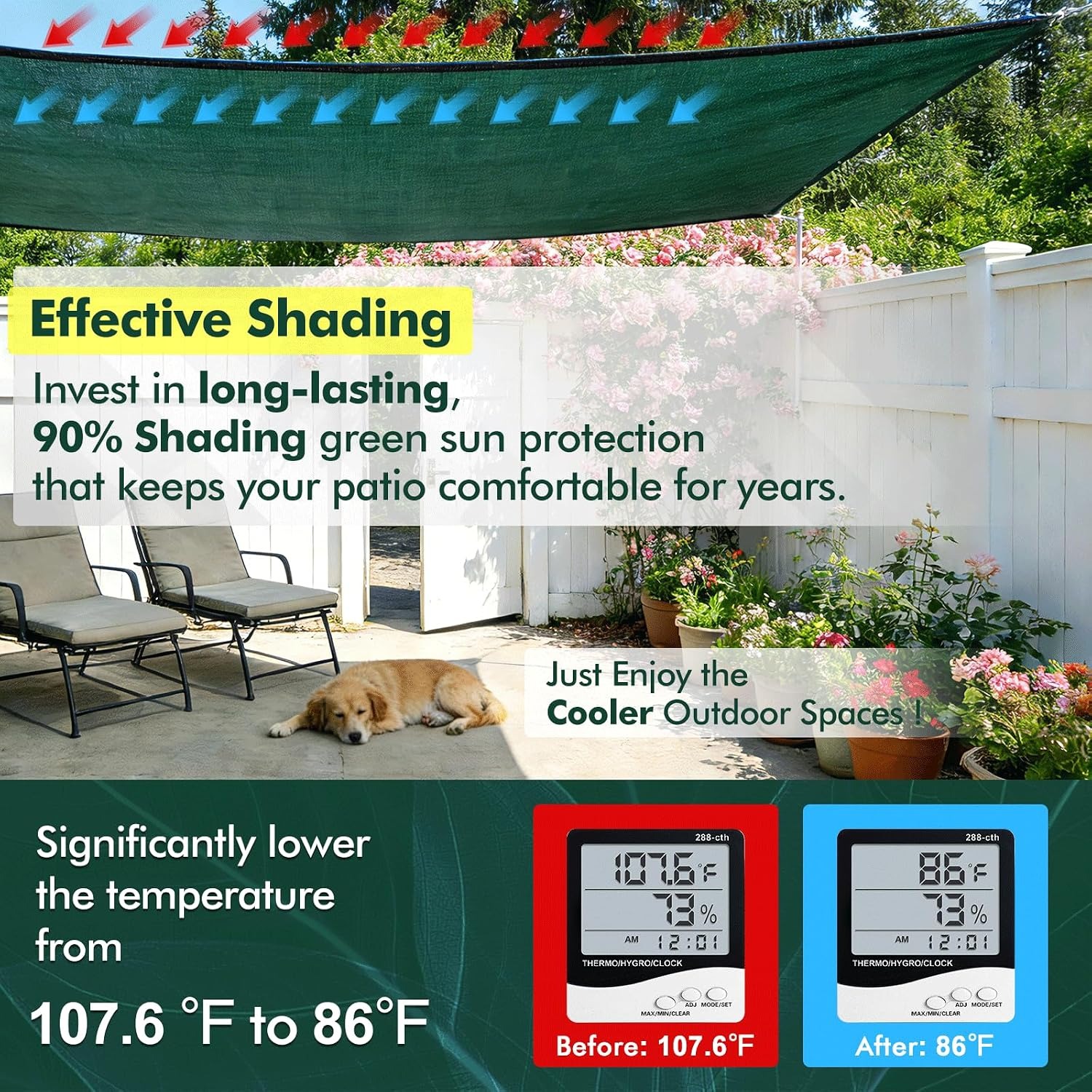
Do not read the rating as a promise of a fixed temperature drop. Heat also comes from paving, nearby walls and still air. Shading one surface does not control every part of an outdoor space.
The rating is not a personal safety certification either. Keep suitable sun protection in your plans, especially when sunlight can enter from the sides.
How the mesh differs from a solid cover
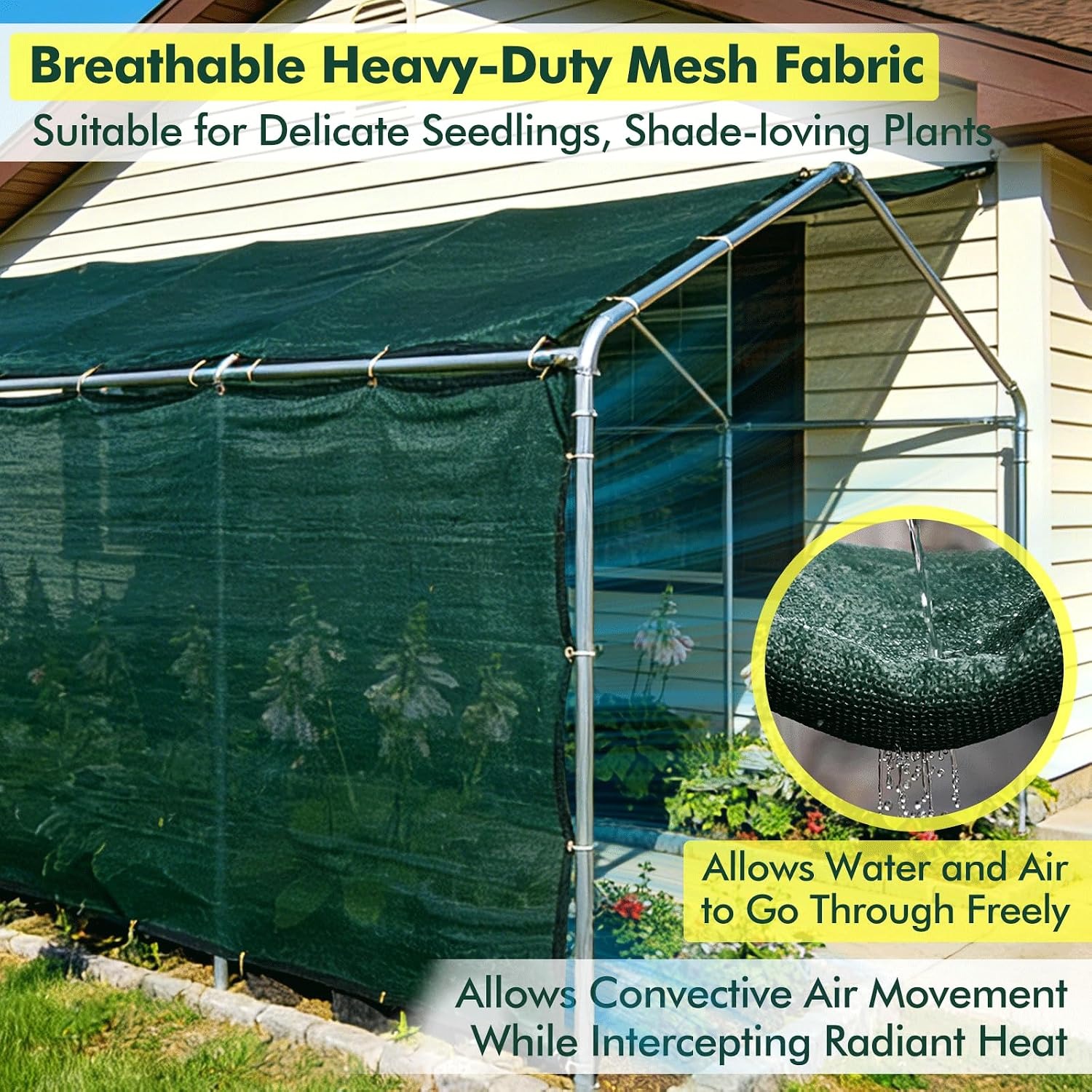
This panel is made from high density polyethylene, usually shortened to HDPE. The mesh is described as breathable, allowing airflow through the fabric rather than creating a solid barrier.
That matters when choosing between outdoor shade fabric and a roof. A mesh panel serves a different purpose from a cover designed to keep rain out. The maker describes rainwater passing through this fabric, so it should not be treated as waterproof shelter.
For a sitting area, consider whether shade alone is enough. If you want to leave cushions, books or other items outdoors during rain, this panel does not provide a stated weatherproof solution.
For garden use, breathable shade cloth offers an alternative to a solid sheet. Still, check conditions beneath it rather than assuming every part of the covered area receives the same airflow or moisture.
Measure the panel and the support layout separately
The supplied size is 3 x 6 m. Mark that rectangle out on the ground if you find measurements hard to picture. It is an easy way to see how the panel relates to a patio, planting bed or existing frame.
Next, measure the support positions. The panel size and the distance between supports are not always the same thing. Your chosen attachment method needs space, and that should be included in your plan.
Do not buy a panel on the assumption that stretching it will solve a size mismatch. Start with a layout that suits the finished size.
Also check the path of the sun. A panel directly above a chair at midday may not shade it later in the afternoon. Watch the space at the times you use it most. A few observations before ordering can prevent an awkward installation.
Check the grommet layout before buying fixings
Shade cloth with eyelets gives you defined places to attach the fabric. This panel has grommets at 50 cm intervals, with the maker's description describing their placement on the short sides.
That detail matters. Do not assume the panel has the same fixing layout around its whole perimeter. Compare the described arrangement with the supports you intend to use.
The reinforced edges and double-stitched seams are useful construction features, but they do not make the panel a structural product. Suitable supports and attachments still matter. No structural load limit or wind-speed rating is supplied in the maker's description.
Fixing hardware is not specified as included. Check that point before planning the job, and seek suitable installation advice if you are unsure about the frame or attachment method.
Decide whether it suits your plants
Garden shade cloth should match the plants beneath it, not just the size of the bed. Plants that prefer a shaded position have different needs from crops grown for strong sunlight.
If you are considering shade cloth for seedlings, check the needs of the specific plants. Young plants do not all need the same light level. A dense panel may suit some situations and be too much for others.
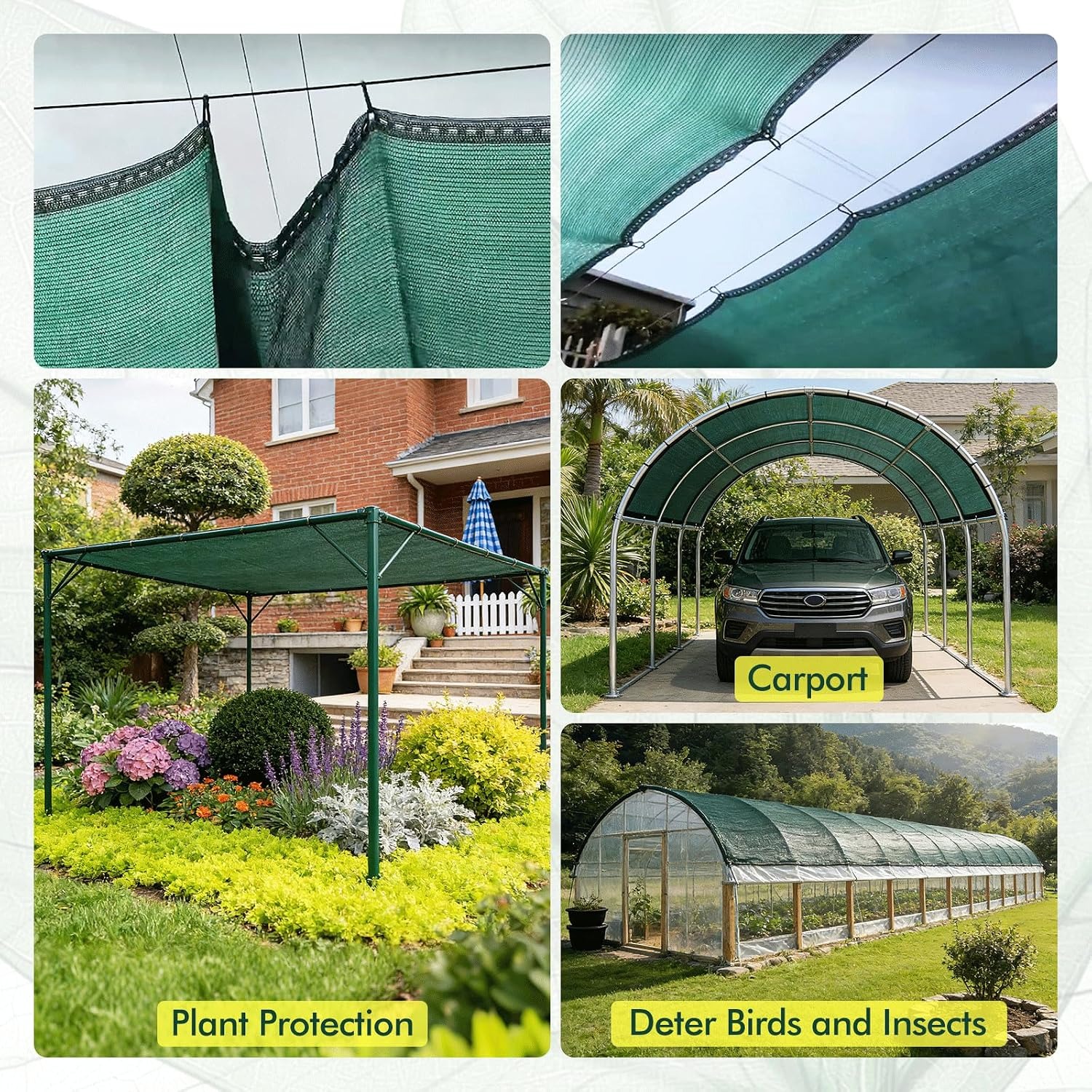
The same applies to greenhouse shade cloth. Look at the light already reduced by the greenhouse covering, then consider what another layer will do. Watch plant growth and conditions rather than treating one shade percentage as a fit for every crop.
Where several plants share a space, grouping them by light needs can make your shade plan easier. It may be more useful to cover one section than to shade the entire growing area.
Think about comfort around a patio
Patio shade cloth can help address direct sun without adding a solid roof. Before choosing it, think about how you actually use the area.
Perhaps you need shade over a table during lunch. Perhaps the issue is low afternoon sun reaching a seat from the side. Those are different layouts, even if the ground area is similar.
For pergola shade cloth, check that the existing frame suits the proposed installation. A frame that looks substantial is not proof that it can carry any added fabric or weather load.
The panel is listed as wind resistant, but no rated wind limit is given. Do not turn that general description into a promise about exposed sites or severe weather. If your space is windy, resolve the support and weather plan before buying.
Treat privacy as a separate question
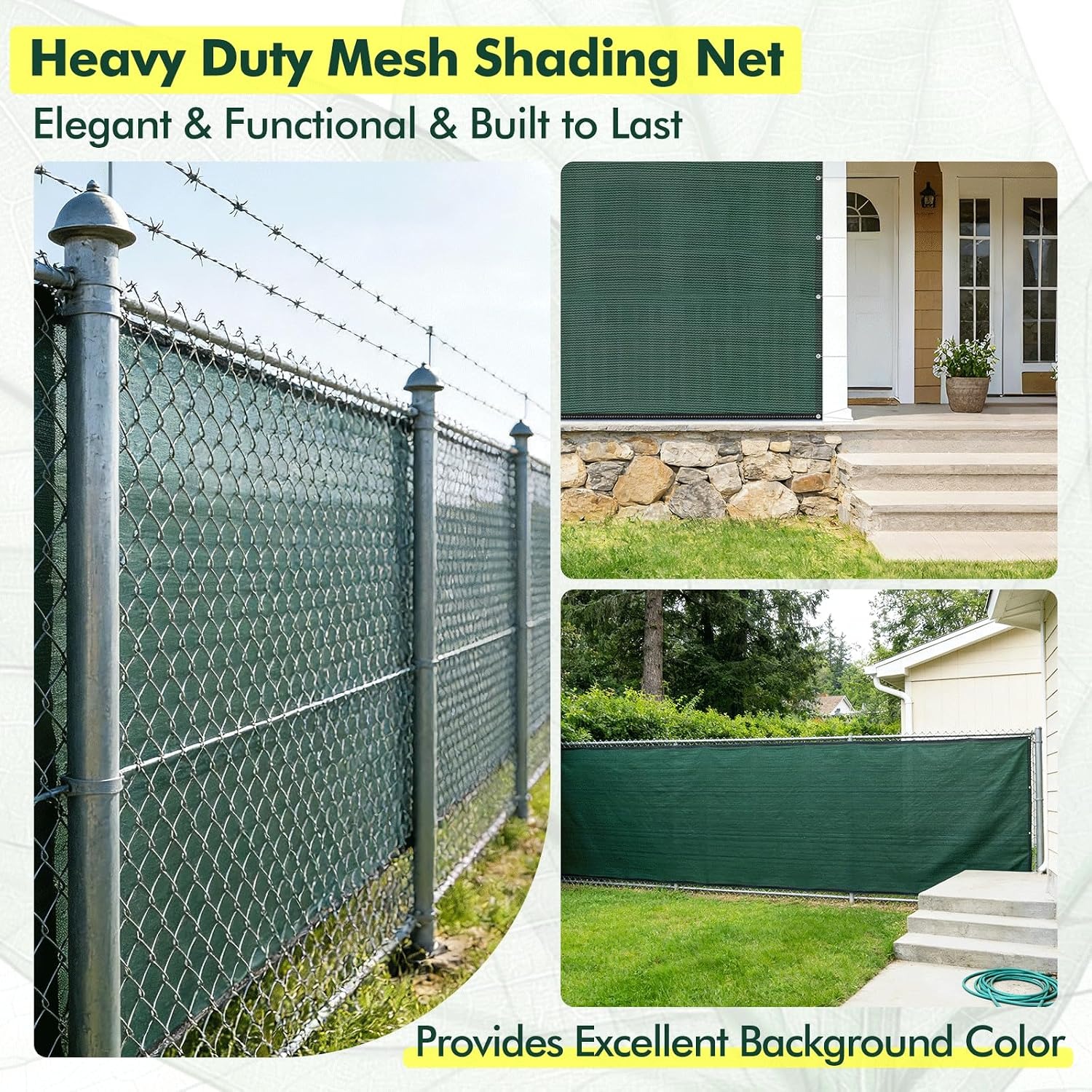
Green shade cloth can also be considered for screening beside a garden or sitting area. Its colour may be less visually prominent near planting than a contrasting panel.
However, a shade percentage does not tell you exactly how private a screen will be. Visibility through mesh can change with viewing angle and the light on either side.
If garden privacy mesh is your main goal, think about where people will stand and what you want to hide. A screen that softens a view may meet your needs even when it is not fully opaque.
Do not treat it as a solid fence or secure enclosure. Shade and visual screening are different jobs from access control and physical protection.
Inspect the panel before putting it to use
When the panel arrives, keep the packaging while you check that it matches your order.
This is also the time to compare the attachment layout with your plan. It is easier to address a mismatch before you start fitting or altering the fabric.
Avoid cutting the panel as a first response to a poor fit. Cutting changes the finished edge construction and affects return eligibility.
If the goods are faulty or wrongly described, that is separate from a change of mind. Those issues are put right free of charge under the stated policy.
Keep care simple and check for wear
Outdoor mesh benefits from regular checks. Look at the seams and attachment points, especially where the fabric meets fittings or nearby surfaces.
Remove loose leaves and other debris gently. Avoid pulling at anything caught in the mesh, since that can place extra strain on a small area. Check care guidance before using cleaning products or washing equipment.
Before storing the panel, let it dry. Fold it without trapping sharp objects inside and keep it away from tools or rough surfaces that could snag the fabric.
No fixed service life is stated. Condition will need to guide your decisions, so keep checking the panel rather than relying on a promised number of seasons.
Plan delivery and returns before the project
A delivery lead time is not specified by the maker. Check the available delivery information for your New Zealand address before arranging installation help or setting a project date.
There is a 14-day return period from delivery for fabric that is unwashed, uncut, unused and in its original packaging. The customer pays return postage for a change-of-mind return.
Those conditions make early inspection worthwhile. Keep the panel in its original condition while you confirm it is right for the project.
If buying it as a gift, ask about the recipient's measurements and plans first. A shade cloth panel is most useful when its size, density and fixing layout match a real space.
The short version
Choose this green shade cloth when your plan calls for one 3 x 6 m mesh panel with strong shading. Its listed features include HDPE construction, reinforced edges, double-stitched seams and grommets at 50 cm intervals.
Before ordering, check plant light needs, support positions and the described grommet layout. Remember that mesh shade is not a waterproof roof, a fully opaque screen or a storm-rated structure.
A careful match between the panel and the space matters more than choosing by shade percentage alone. Measure first, keep the installation plan realistic and inspect the fabric before putting it to use.